


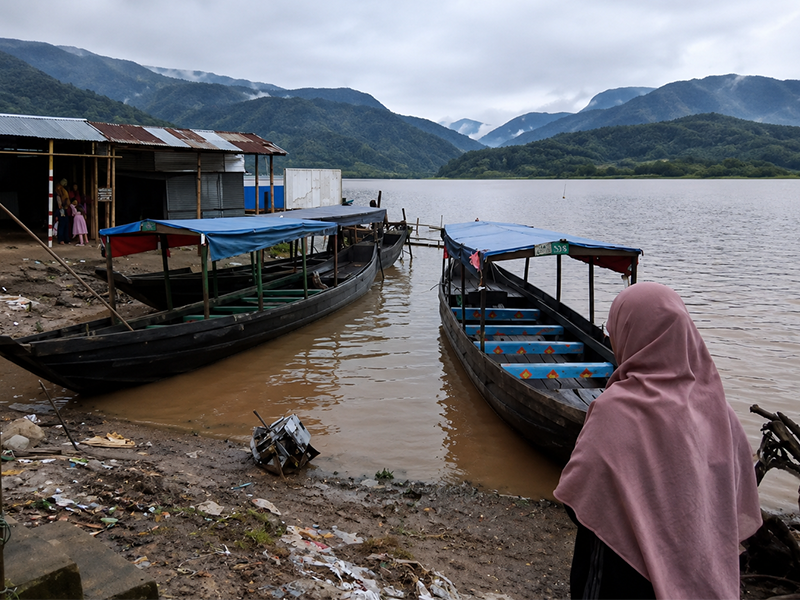
Flooding, riverbank erosion and severe waterlogging are causing widespread damage across Bangladesh, destroying crops, displacing thousands of people and threatening critical infrastructure as rising rivers and heavy rainfall batter districts from the north to the southeast.
The agricultural sector has suffered extensive losses, with thousands of farmers facing damaged crops and mounting financial hardship.
In Khagrachari, a week of flooding submerged 1,031 hectares (about 2,548 acres) of cropland, affecting more than 7,000 farmers. The local Agriculture Department estimated agricultural losses at 11.20 crore taka (approximately $920,000), representing 2,710 metric tons of damaged crops. Fisheries sustained an additional 2.25 crore taka (approximately $185,000) in losses, while livestock losses exceeded 10.5 lakh taka (approximately $8,600).
One farmer described the extent of the damage. In translated remarks, the farmer said, “I planted 10 decimals (about 0.1 acre) of okra and long beans. The cucumbers and spinach are now completely under water.”
In Moulvibazar, about 400 hectares (about 988 acres) of crops and seedbeds were destroyed, while floodwaters washed away 450 fish enclosures. Local officials initially estimated losses at 2 crore taka (approximately $164,000).
“We are assessing the damage, and the losses may increase. We will try to include affected farmers in various incentive programs in phases to help compensate for their losses,” a local Agriculture Department official said in translated remarks.
Riverbank erosion has compounded the crisis, threatening homes, businesses and flood protection infrastructure.
Authorities in Kurigram identified 38 active points of riverbank erosion. In Chilmari upazila, a 60-meter (197-foot) section of a protection dam collapsed. In Rajarhat upazila, the river swallowed between 20 and 25 houses over three to four days.
In translated remarks, one Kurigram resident said, “If a building catches fire, the land remains. But river erosion carries everything into the river.”
In Bhola’s Ilisha area, strong currents in the Meghna River caused a 30-meter (98-foot) section of concrete blocks protecting a town defense embankment to collapse, placing an estimated 100,000 people at risk if the structure fails. Authorities closed the Ilisha launch terminal as erosion continued to threaten nearby businesses.
In translated remarks, one shopkeeper said, “The erosion is destroying our shops. We cannot afford to move the business to another location. If authorities do not act quickly, the embankment could fail and thousands of families could be flooded.”
Flooding also damaged infrastructure in Moulvibazar after the Manu and Dhalai rivers breached embankments at five locations. The flooding damaged or destroyed 90 kilometers (56 miles) of rural roads, along with five culverts and bridges.
Elsewhere, prolonged rainfall has left Satkhira struggling with severe waterlogging. The district recorded 448 millimeters (17.6 inches) of rainfall during the first 15 days of July. Local officials attributed the flooding to heavy rain, a deteriorating drainage system and enclosed fish-farming ponds that obstruct natural water flow.
The humanitarian impact has been significant. In Moulvibazar, about 4,000 people lost their homes across five upazilas.
In translated remarks, one flood victim said, “Floodwater broke through the doors of my home. I am in great difficulty. I do not have money for food, and I do not know how I will rebuild my house.”
Local authorities have begun emergency response efforts as conditions continue to evolve.
In Bhola, the Bangladesh Water Development Board accelerated the placement of geo-bags valued at 45 lakh taka (approximately $37,000) across a 50-meter (164-foot) stretch in an effort to slow erosion. In Lalmonirhat, the district administration allocated 5 lakh taka (approximately $4,100) and 100 metric tons of rice to support residents threatened by rising water levels in the Teesta River.
In Satkhira, officials identified 302 illegal encroachments along local rivers that they plan to remove after receiving budget approval from the Ministry of Land. Authorities are also working to improve drainage and restore water flow.
In translated remarks, the Satkhira Upazila Nirbahi Officer said, “We have identified several locations and are trying to drain the water by digging drains and canals. There is also significant silt buildup in the waterways, and silt removal has already begun at one or two locations.”
The overlapping disasters have left communities across Bangladesh confronting simultaneous threats from flooding, erosion and waterlogging, with widespread losses to agriculture, infrastructure and housing as local authorities continue emergency response and recovery efforts.