


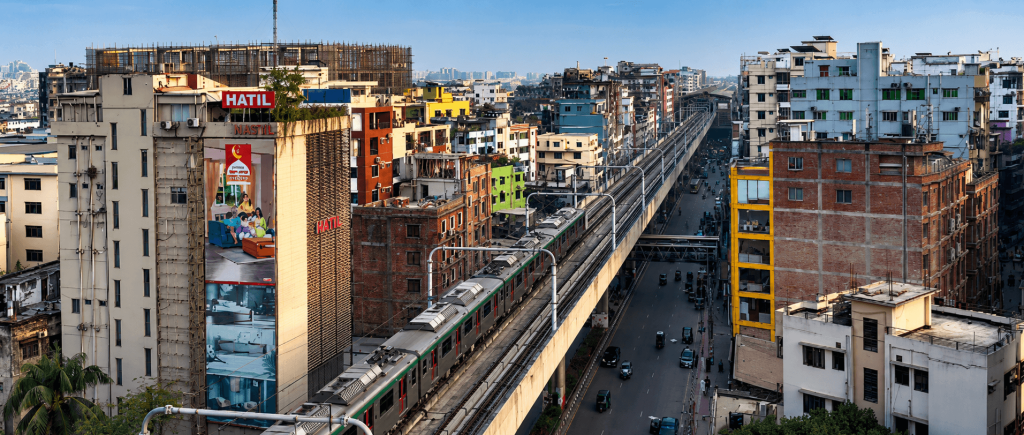
An independent safety audit has revealed severe structural defects in the Dhaka Metro Rail system, including 730 defective bearing pads and widespread cracking, raising deep concerns over passenger safety and infrastructure durability, according to a report in the Bangladesh Pratidin.
The audit identified cracks in 46 pier heads and at least 20 box girders along the route from Uttara North to Motijheel. A nine-member independent safety committee described the flaws not as isolated incidents but as a “compound risk profile” that threatens long-term safety. According to the committee, these defects potentially stem from poor-quality materials, construction errors, or design weaknesses.
Operational efficiency has also been severely compromised by the infrastructure issues. Due to abnormal vibrations and shaking, temporary speed restrictions have been imposed at 10 different locations. While the MRT Line-6 was designed to reach maximum speeds of 110 kilometers per hour, trains are currently operating between 60 and 90 kph, with speeds dropping to 44 to 47 kph in certain sections. Furthermore, five train sets have been removed from operation due to undershooting problems.
The comprehensive investigation was prompted by fatal safety failures. On Oct. 26, 2025, a displaced load-bearing pad fell near the Farmgate station, killing a pedestrian named Abul Kalam. A similar incident occurred in the same area just a year prior, prompting the High Court and the Ministry of Road Transport to order the formation of the independent safety committee to evaluate the project’s structural capacity and safety.
Following the committee’s report, which was submitted on July 15, the High Court has mandated the implementation of the report’s short-term recommendations within 30 days. As a priority, authorities have been ordered to replace the bearing pads on pillars 423, 442, 446, and 448.
The committee’s report highlighted the urgent need for a real-time structural health monitoring system, which the metro network currently lacks. Authorities were advised to regularly monitor for subsidence and repair cracks in pillars and viaduct beams under expert supervision.
Additional recommendations require officials to ground any trains with cracked or severely defective wheels until they are fully repaired. The committee also mandated that stations and electrical control rooms be secured against waterlogging before the monsoon season, drainage pathways be cleared, and modern railway testing equipment be procured. Finally, the report stressed that alternative safety measures and emergency power supplies must be fully operational to ensure passengers can be safely evacuated in the event of an accident.