


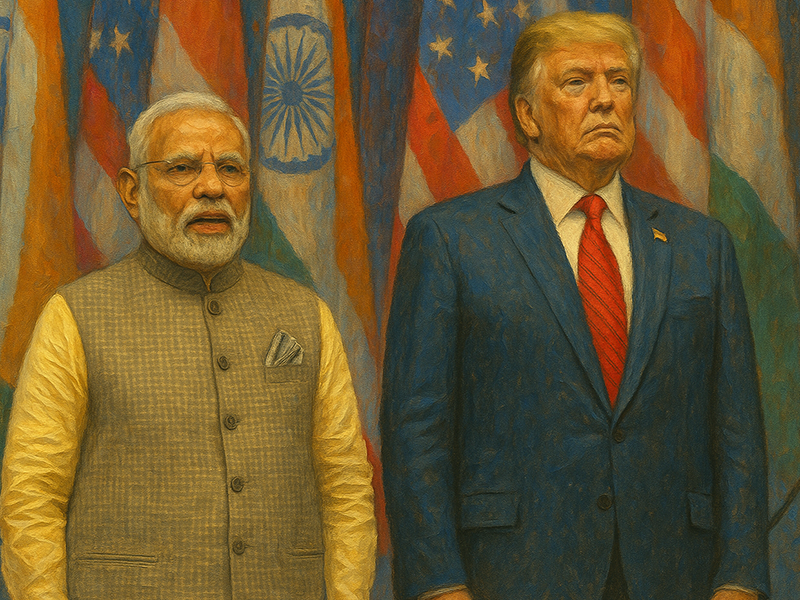
Pakistan’s recent diplomatic maneuvers appear to have won President Donald Trump’s favor in a way that New Delhi did not, leaving India diplomatically sidelined even as it insists the U.S. played no mediating role in ending May’s flare-up along the Line of Control.
In mid-June, Islamabad formally announced it would nominate Trump for the 2026 Nobel Peace Prize, praising his “strategic foresight and stellar statesmanship” in brokering a cease-fire between Pakistan and India after four days of intense border skirmishes. Pakistan’s statement credited Trump’s “robust diplomatic engagement” for de-escalating what could have become a catastrophic confrontation between two nuclear-armed neighbors.
Trump, for his part, has enthusiastically embraced Pakistan’s backing. On social media and in comments to reporters, he listed India-Pakistan alongside other conflicts he claims to have resolved — Serbia-Kosovo, Egypt-Ethiopia, even potential Iran-Israel strikes — and lamented that he “won’t get a Nobel Peace Prize no matter what I do.” He further asserted that stopping a war between India and Pakistan should alone have earned him the prize “four or five times.”
By contrast, New Delhi has bristled at any suggestion of external mediation. India’s foreign secretary, Vikram Misri, told journalists that Prime Minister Narendra Modi made it “absolutely clear” to Trump that the cease-fire resulted from Pakistan’s own request to India, not third-party intervention. India declined to comment further on Islamabad’s nomination, and Indian officials have repeatedly emphasized bilateral channels as the sole mechanism for resolving Indo-Pak tensions.
The timing of Pakistan’s move underscores its broader strategy to deepen ties with the Trump administration. Earlier the same week, Field Marshal Asim Munir, Pakistan’s army chief, became the first Pakistani military leader to visit the White House under a civilian government, securing a private lunch with the U.S. president. That invitation alone signals a level of access and influence New Delhi has yet to match.
India’s muted reaction — and its insistence that Trump played no role — risks reinforcing the perception that it is on the diplomatic back foot in Washington. While Modi’s government maintains its traditional security partnership with the U.S., Islamabad’s public gratitude and high-profile military engagement with Trump have generated fresh goodwill in Republican circles. As the former president positions himself for a possible 2028 campaign, such overtures from Islamabad may carry electoral weight among constituents who value a tough but peace-broker image.
Looking ahead, India may need to counterbalance by more visibly courting both major U.S. parties. Without a similarly high-profile U.S. engagement, New Delhi could find itself playing catch-up, its version of events dismissed in favor of Islamabad’s narrative of Trump-led peacemaking. Pakistan’s combination of symbolic gestures — like the Nobel nomination — and substantive access to Trump has so far outpaced India’s diplomatic outreach, leaving New Delhi struggling to regain the narrative in Washington.