


A national commission investigating enforced disappearances in Bangladesh has reported widespread torture and secret detentions carried out during the 15-year rule of former Prime Minister Sheikh Hasina, revealing what it describes as a state-enabled system of abuse and impunity.
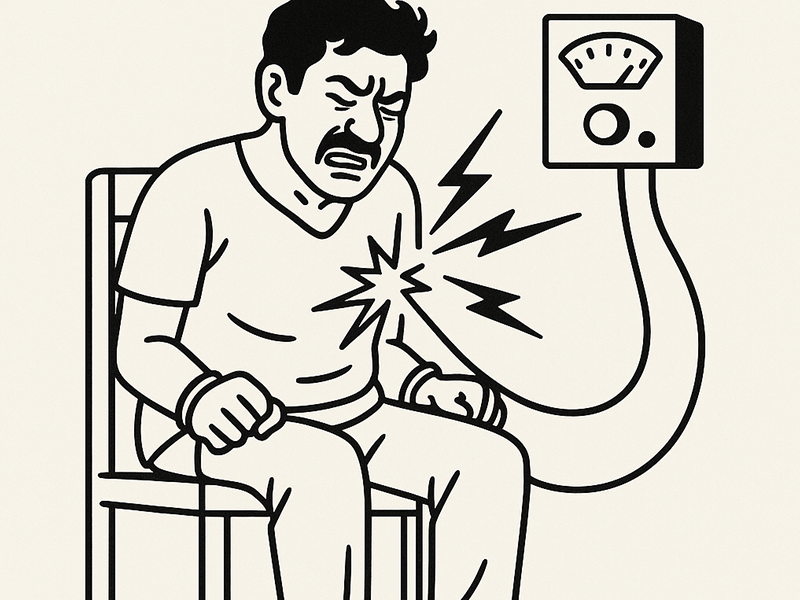
The Commission on Enforced Disappearances, chaired by retired High Court Justice Mainul Islam Chowdhury, submitted its second interim report Wednesday to Chief Advisor Muhammad Yunus. The report documents verified accounts from victims and witnesses who describe being held in clandestine facilities and subjected to methods of torture including electric shocks, waterboarding, beatings, and forced stress positions.
The commission has received 1,837 complaints, verifying 1,772 as active cases. Of those, 1,427 victims have resurfaced alive, while 345 remain missing. Officials said the total number of cases could exceed 3,500 as more reports are filed.
A majority of disappearances were attributed to state agencies, including police, the Rapid Action Battalion, the Detective Branch, and the Counter Terrorism and Transnational Crime unit. Together, they were linked to more than 67 percent of the verified incidents.
Testimonies describe detainees being strung from ceilings, electrocuted during urination, and shackled to bedposts for weeks in hidden facilities often located inside military compounds or plain buildings. One survivor recalled being handcuffed to a metal pipe for 19 days, unable to sit or sleep. Another described being tied upside down and repeatedly dunked in water until he lost consciousness.
The report said torture was not random but premeditated and systematic, with detention centers equipped with pulley systems, soundproof interrogation rooms, and restraint devices. At RAB 2’s TFI Cell, investigators found remnants of a rotating chair used to spin victims until they vomited or lost consciousness. A similar device used by military intelligence reportedly allowed near 360-degree rotation of the detainee’s body.
One detainee described being strapped upright in such a machine and spun until he believed his bones were completely dislocated. The same survivor said interrogators later pulled his legs apart and threatened further electric shocks.
Electric shocks were the second most commonly reported torture method. Victims recounted being shocked on their feet and genitals, often losing consciousness. One man said, “They applied two clips to my feet… I felt my private parts were burning… Four to five people beat me from head to toe.”
The commission also documented sexualized torture, including targeted abuse of genitals and threats of permanent injury. One survivor said, “They gave electric shocks for 15 to 20 minutes. When they stopped… I thought there was no world left.”
In several cases, victims were kept in prolonged stress positions, denied water and food, and left exposed to mosquitoes in unhygienic cells without bedding or privacy. Male detainees were often forced to lie over toilet pans under constant surveillance, while female detainees were denied access to personal coverings like an orna.
Waterboarding was confirmed at multiple facilities. One man said he was bound with bamboo sticks under his knees and across his chest before water was poured over a cloth covering his face. “My breathing stopped,” he told investigators. “I felt I had no more strength.”
The commission said this network of secret detention relied on enforced disappearances to avoid scrutiny, with victims held off record, often without arrest warrants or court appearances. In some instances, detainees were hidden until physical signs of torture healed.
One high-profile case involved Subrata Bain, a fugitive on Interpol’s most wanted list. He was secretly held by RAB after an illegal prisoner exchange with India in 2022 and released quietly in 2024. The commission said Bain has since resumed criminal activities, adding that had he been processed through the legal system, his release could have been lawfully contested.
The report emphasized that the methods used were consistent across different years and locations, pointing to a coordinated and institutionalized system. “This culture was not an anomaly but a normalised practice,” it said.
The commission also cited testimony suggesting judicial complicity in torture. In one account, a judge allegedly remarked about a detainee resisting a forced confession, saying, “He’s standing upright, isn’t he? … We’ll have to do something to make him ready.”
Survivors described lasting psychological damage. A UK-based forensic psychiatrist told the commission that trauma from prolonged abuse impairs victims’ ability to form coherent narratives. “Survivors are not being evasive, trauma has disrupted the brain’s ability to communicate,” he said.
The report concluded that enforced disappearances and torture, often justified in the name of national security, have instead weakened domestic stability, eroded public trust in institutions, and caused enduring harm to individuals, families, and society.