


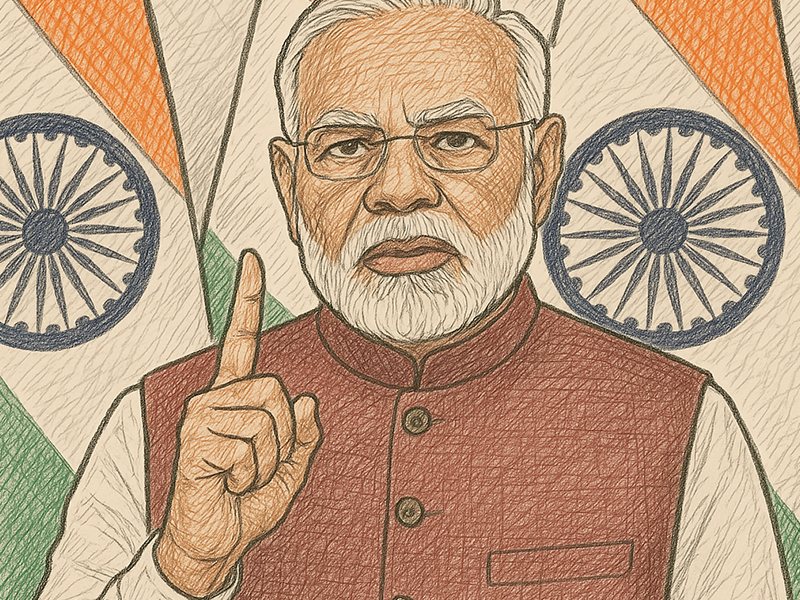
Canada’s decision not to invite Indian Prime Minister Narendra Modi to the Group of Seven summit this month is a calculated and justifiable response to mounting concerns about human rights and international norms.
For the first time since 2019, India will not be present at the G7 table, despite its rising economic influence and recent history of participation. The move, while diplomatically stark, aligns with growing global unease over Modi’s domestic policies and foreign posture.
Modi, whose Hindu nationalist government has ruled India since 2014, has drawn sustained criticism for policies that observers say erode democratic institutions and marginalize minority communities, particularly Muslims and Sikhs. Under his leadership, India’s secular foundation has been tested by increasing government control over civil society, the press and political dissent. The recent targeting of Sikh activists abroad, including in countries like Canada, reflects a disturbing extension of these domestic policies into foreign affairs.
Bilateral ties between Canada and India sharply deteriorated in September 2023, when then-Prime Minister Justin Trudeau accused Indian agents of orchestrating the killing of Hardeep Singh Nijjar, a Canadian citizen and prominent Sikh activist. India denied the allegations, calling them absurd, but ongoing investigations and diplomatic fallout have deepened mistrust. Canadian authorities continue to examine possible links between Indian operatives and efforts to silence Sikh separatists on Canadian soil.
Despite a new administration under Prime Minister Mark Carney, Canada chose not to invite Modi to the G7 summit scheduled for June 15 to 17. It is a host nation’s prerogative to invite non-member countries, and Canada has extended invitations to others, including Ukrainian President Volodymyr Zelenskiy, Australian Prime Minister Anthony Albanese and Mexican President Claudia Sheinbaum. India’s absence appears intentional, not an oversight.
The exclusion sends a clear message. Canada, a G7 member, is signaling that allegations of political assassinations and transnational repression cannot be overlooked, even when directed by a leader of one of the world’s largest democracies. The Modi government’s continued demands that Canada curtail Sikh activism have also complicated relations, with Indian officials suggesting that unresolved concerns may have influenced the likelihood of participation even if an invitation had been extended.
Externally, Modi’s tenure has seen increased tensions with neighboring countries, including Pakistan and China. His government’s militarized rhetoric and border confrontations have alarmed regional observers. The G7, which prioritizes international stability, peace and cooperation, faces a contradiction in embracing a leader associated with combative diplomacy and nationalist politics.
At home, Modi has used international forums to project himself as a global statesman. India’s exclusion from the G7, at a time when the International Monetary Fund forecasts it will soon become the world’s fourth-largest economy, may undercut that narrative. The absence is already drawing criticism from opposition lawmakers, who frame it as a diplomatic misstep.
Canada’s move is not merely symbolic. It is a reminder that economic power does not shield a nation from scrutiny over human rights or international conduct. Modi’s leadership has long demanded greater accountability. By denying him a seat at the G7 table, Canada has taken a necessary and principled stand.