


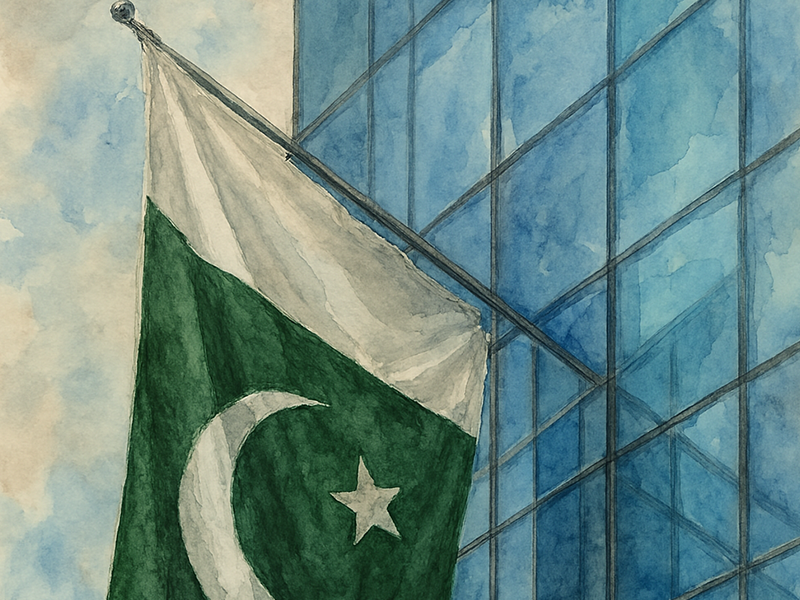
The Pakistani government has a rare opportunity to drive transformative development in Balochistan through its stake in the massive Reko Diq copper and gold mine. With construction underway on what is expected to become one of the world’s largest copper-gold operations, federal and provincial authorities must act decisively to ensure that the province, Pakistan’s most impoverished, receives its fair share of the benefits.
Balochistan lags far behind other regions in almost every development metric. Approximately 71 percent of its population lives below the poverty line, according to government estimates. The province has the lowest Human Development Index in the country, with limited access to healthcare, clean drinking water, reliable electricity and quality education. The literacy rate stands at just 46 percent, the lowest among Pakistan’s provinces. These systemic deficiencies have left generations of Baloch residents disenfranchised and underrepresented in the national economic narrative.
Now, with a $9 billion mine at its doorstep, jointly owned by Barrick Gold and Pakistani federal and provincial entities, there is a clear chance to change that narrative. Barrick predicts the mine will produce copper and gold for 42 years, making it a long-term revenue source for both Islamabad and Quetta. Yet, without robust oversight and a transparent framework for revenue distribution, Balochistan risks once again being left behind.
Safeguards against corruption must be instituted from the outset. The government should establish independent monitoring mechanisms to track the flow of funds generated from the mine and ensure they are used for public development. Moreover, a clearly defined share of the proceeds must be directed toward infrastructure, healthcare, education and job training in Balochistan.
The province’s lack of development is not due to an absence of resources but rather to a longstanding failure to invest equitably. That must change. Local communities need to be involved in decision-making processes and benefit directly through employment, education programs and improved living standards.
It is also crucial that refining and value-added processes not be entirely outsourced. While Barrick executives argue that current output volumes and power availability do not support a domestic refinery, the government must explore incentives to encourage long-term investment in in-country processing capabilities. Keeping value-added production in Pakistan could stimulate broader industrial growth and reduce the country’s reliance on raw material exports.
As discussions continue with international lenders including the Export-Import Bank of the United States, the International Finance Corporation and Saudi Arabia’s Manara Minerals, the Pakistani government must use this moment to negotiate from a position of strength. Critical minerals like copper are now strategic assets on the global stage. Ensuring that Pakistan, and particularly Balochistan, benefits fully from these resources is both a moral obligation and a national imperative.
The mine’s location, near volatile border regions, further underlines the need for inclusive development to foster stability. Security in Balochistan cannot be achieved through force alone; it must be rooted in opportunity, inclusion and dignity for its people.
The Reko Diq project is not just a mining deal. It is a test of whether Pakistan can turn its natural wealth into widespread prosperity. Balochistan cannot afford for this opportunity to be wasted.