


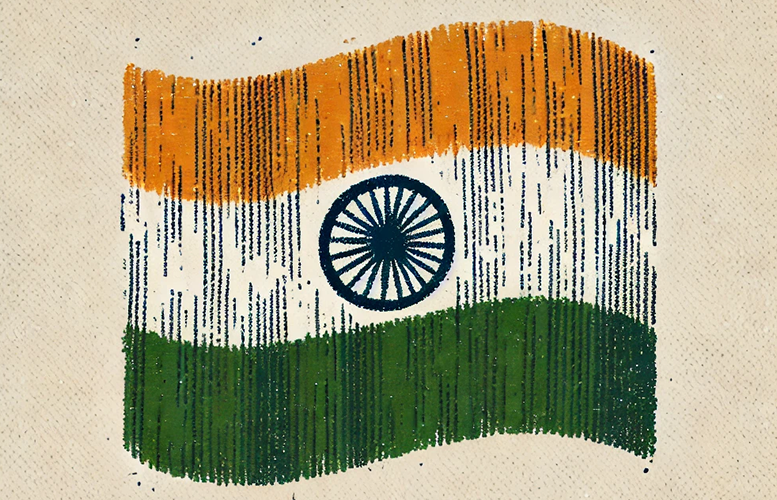
As India launches its largest-ever naval exercise with African nations, its ambitions on the global stage are on full display. The six-day operation, co-hosted by Tanzania and featuring ships from nine African nations, marks a bold attempt to elevate India’s maritime profile in the Indian Ocean and assert its presence on a continent where China, Russia, and Turkey have gained significant ground. But while projecting power abroad has its merits, India would do better to first shore up relations closer to home.
The Modi administration is undeniably seeking to frame India as a “first responder” and “preferred security partner” in the Indian Ocean, with growing naval activity reflecting this intent. Yet, as analysts have pointed out, these moves expose the gap between India’s strategic aspirations and its material capabilities. That gap becomes even more pressing when viewed in light of the escalating influence of China among India’s South Asian neighbors.
In recent years, China has entrenched itself in Sri Lanka, courted the Maldives under a pro-Beijing president, and most recently, capitalized on the political shift in Bangladesh. The rise of interim leader Muhammad Yunus in Dhaka and his outreach to Beijing has unsettled New Delhi, further weakening its traditional sway in the region.
Instead of doubling down on distant military exercises, Prime Minister Narendra Modi should be addressing the fraying ties with immediate neighbors. India’s relationship with Bangladesh — once considered a success story of regional diplomacy — is increasingly uncertain. Efforts by the Modi government to minimize or distance itself from Dhaka’s new administration are not only counterproductive but signal a troubling retreat from regional leadership.
By prioritizing far-off engagements in Africa over diplomacy at home, India risks losing the strategic depth of its own backyard. The African continent, with its vast resources and geostrategic importance, is undoubtedly a critical arena for global influence — but for India, meaningful global leadership begins with stability and cooperation in South Asia.
A reset is urgently needed. India’s aspirations to be seen as a counterweight to China will ring hollow if it cannot maintain trust and leadership in its own neighborhood. Strengthening ties with Bangladesh, re-engaging constructively with Sri Lanka, and reasserting influence in the Maldives must come before any claims of regional dominance in Africa.
India may be charting a course across the Indian Ocean, but the real test of leadership lies much closer to shore.