


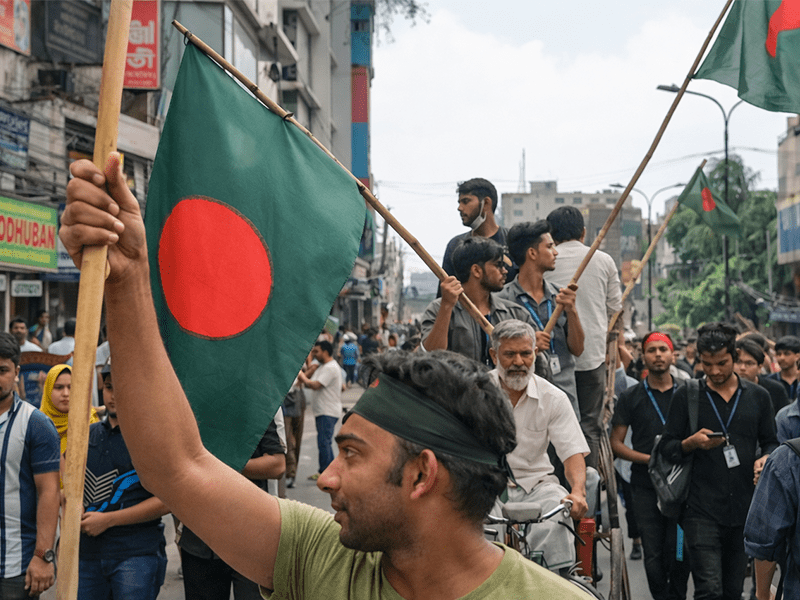
Nahid Islam’s decision to bring Bangladesh’s National Citizen Party into an alliance with Jamaat-e-Islami reflects a shift driven by political necessity more than ideology. The move has prompted resignations and a widening backlash, but it underscores a deeper challenge: the youth-led force behind last year’s uprising has been losing political ground.
That erosion was already evident in October, when key parties signed the July Charter outlining the country’s post-uprising roadmap. The NCP did not attend. At the time, Islam voiced sharp frustration, arguing that the process lacked credibility. “The signing of the July Charter by a few political parties does not constitute national unity,” he said, adding that the party stayed away because there was no binding legal framework for carrying out its commitments.
Since then, established parties have consolidated their positions while the NCP has struggled to expand its organisation or define its policy direction. With polls showing the BNP and Jamaat far ahead, Islam appears to have concluded that joining a larger bloc is the only way to retain a measure of influence.
To supporters, the alliance marks a retreat from the ideals of the uprising. For Islam, it may be a strategic concession to avoid political irrelevance.