


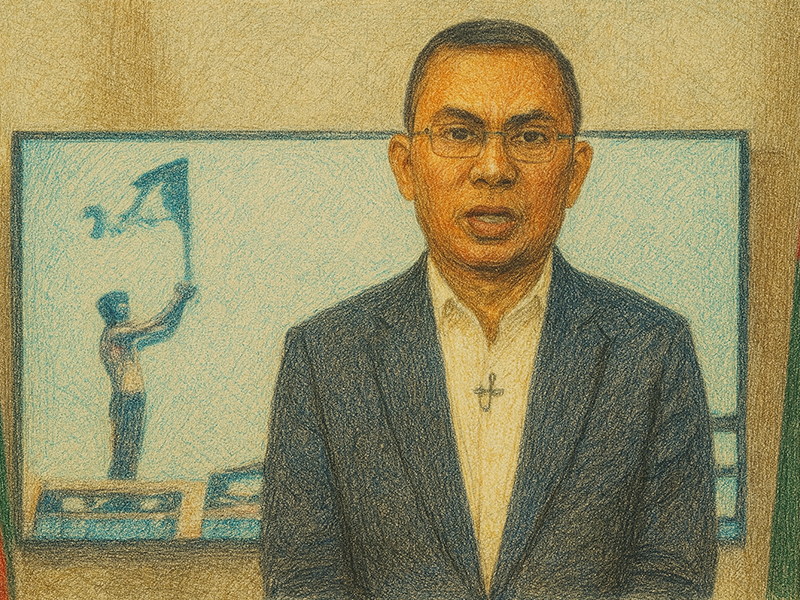
Tarique Rahman’s anticipated return to Bangladesh, recently confirmed by senior leaders of the Bangladesh Nationalist Party (BNP), is being portrayed by supporters as a turning point in national politics. But given his history of corruption convictions and his role in orchestrating political violence, his re-entry raises serious concerns for Bangladesh’s democratic future, particularly in a post-Hasina political landscape.
Rahman, the acting chairman of the BNP, was convicted in absentia in August 2023 and sentenced to nine years in prison on corruption charges. The case, filed by the Anti-Corruption Commission in 2007, found that he had amassed illicit wealth and concealed it in official declarations. He was also fined over $273,000, with additional jail time ordered if the fine remained unpaid.
More critically, Rahman faces a life sentence in connection with the 2004 grenade attack that targeted then-Prime Minister Sheikh Hasina, an act of political terror that left 24 people dead and hundreds injured. Though BNP leadership has repeatedly called the verdicts politically motivated, multiple court rulings have affirmed his involvement in what remains one of the most violent episodes in Bangladesh’s democratic history.
Rahman has lived in self-imposed exile in London since 2008, continuing to lead the BNP remotely while avoiding arrest. His leadership has been defined more by political obstruction than engagement—marked by boycotts, street protests, and a refusal to engage in meaningful electoral reform. Under his guidance, the BNP has consistently distanced itself from democratic processes in favor of agitation politics, contributing to chronic political instability.
Now, with Sheikh Hasina ousted and the political landscape in flux, Rahman’s return could serve to deepen existing divisions. Rather than representing a fresh start, his re-emergence risks reinforcing a pattern of political impunity and power consolidation among entrenched elites. It could also exacerbate tensions between rival factions, destabilize fragile institutions, and revive cycles of retributive politics.
Far from offering a new vision for the country, Rahman’s re-entry appears aimed at reclaiming a leadership role mired in corruption and controversy. His return may energize BNP supporters, but it could also reignite the very dynamics — violence, corruption, and authoritarian drift — that have long hindered Bangladesh’s democratic progress.
In a period that demands reform and accountability, the return of a figure with such a compromised legacy may signal not renewal, but regression.