


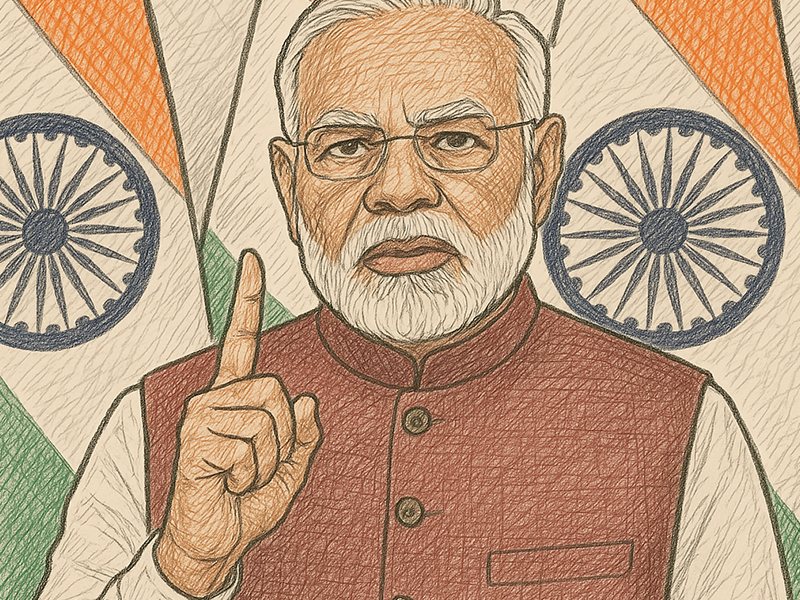
India finds itself increasingly isolated on the world stage, a consequence largely tied to Prime Minister Narendra Modi’s hubristic approach to foreign policy. Despite the country’s rising economic stature and strategic importance, Modi’s high-profile efforts to forge close ties with global superpowers have fallen short, exposing India’s fragile diplomatic footing and the limits of its international leverage.
Modi’s attempts to cultivate a personal rapport with Chinese President Xi Jinping and President Donald Trump, two of the world’s most powerful leaders, have unraveled into strained relationships marked by border clashes and punitive trade measures. Once hopeful of transforming India’s ties with Beijing through grand gestures like shared moments on a riverfront swing, Modi instead confronted years of military standoffs along a disputed Himalayan border. Similarly, his public and politically charged endorsement of Trump’s re-election bid gave way to an unexpected rupture, with the U.S. imposing steep tariffs on Indian goods and undercutting India’s diplomatic position in South Asia.
This diplomatic breakdown reveals more than just individual frictions; it reflects a broader pattern of India’s current foreign policy miscalculations. The country’s neighbors, such as China, Pakistan, and even some regional partners, have responded warily or antagonistically to Modi’s approach, leaving India without reliable allies in its immediate geopolitical environment. China’s recent support for Pakistan amid military tensions with India only underscores New Delhi’s precarious position. At the same time, the United States, once viewed as a potential strategic counterweight to China, has demonstrated a transactional and often unpredictable stance that has left Indian officials scrambling to recalibrate.
The fallout from Modi’s overreach is forcing India into a moment of uncomfortable introspection. Instead of projecting power through grand international courtships, India may need to return to what once made Modi’s foreign policy promising: a focus on strengthening ties with its neighborhood first. The “Neighborhood First” policy that marked Modi’s early years prioritized building trust, economic partnerships, and security cooperation with South Asian neighbors like Nepal, Bangladesh, Sri Lanka, and Bhutan. This pragmatic regional diplomacy helped stabilize relations and created a foundation for India’s broader international ambitions.
Re-engaging with this neighborhood-centered strategy could provide India with the reliable partnerships and goodwill it sorely needs. Stronger regional ties would bolster India’s security, economic growth, and international standing in a way that grand overtures to superpowers have failed to achieve. In a world marked by shifting alliances and complex rivalries, India’s best hope for influence lies not in isolated displays of hubris but in patient, consistent diplomacy at home.
Ultimately, Modi’s challenge will be to temper personal ambitions with strategic realism and recognize that India’s rise depends as much on nurturing its neighborhood as on courting distant powers. Without that recalibration, India risks further diplomatic isolation and diminished global influence.