


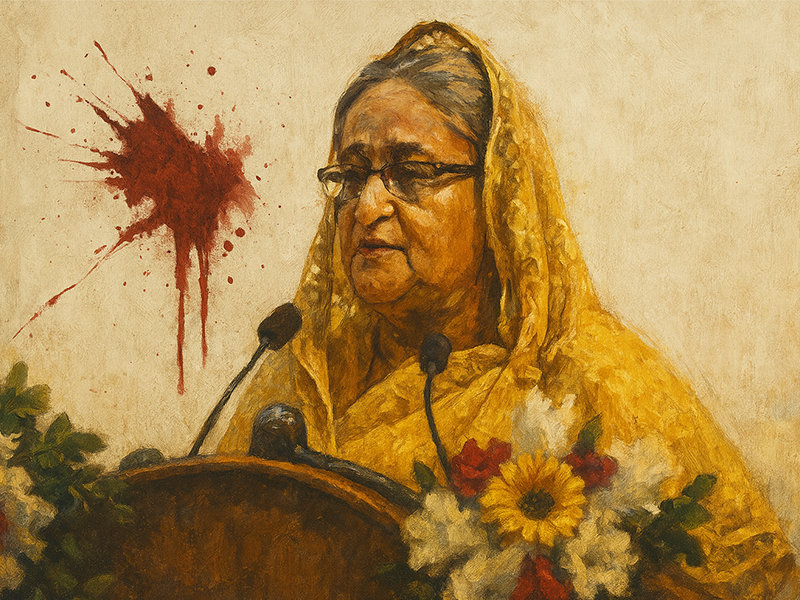
A leaked phone call appears to show that former Bangladeshi prime minister Sheikh Hasina personally authorized the use of lethal force during a deadly crackdown on anti-government protests in Dhaka last year, according to an investigation by the BBC.
Sheikh Hasina, 76, of Gopalganj, is being tried in absentia by Bangladesh’s International Criminal Tribunal for alleged crimes against humanity. She fled to India in August 2024 and has denied all charges. Her party, the Awami League, claims the leaked audio does not demonstrate any unlawful action.
In the audio, reportedly recorded on July 18, 2024, Hasina is heard telling a senior official that security forces had been instructed to “use lethal weapons” and “shoot wherever they find [protesters].” The BBC verified the recording through forensic experts and confirmed its authenticity using voice matching with known audio samples of Hasina.
The protests, which began as demonstrations against civil service job quotas favoring descendants of 1971 war veterans, escalated into a national movement that forced Hasina from power after 15 years. UN investigators estimate that up to 1,400 people were killed during the 36 days of unrest.
Some of the deadliest violence occurred on August 5, 2024, when police opened fire in Dhaka’s Jatrabari neighborhood, killing at least 52 people, according to the BBC. Earlier reports estimated the toll at 30. The BBC investigation found that police began shooting after army personnel, who had been separating crowds, withdrew from the area. Protesters later retaliated, setting fire to a local police station.
The leaked call was one of several recordings made by the National Telecommunications Monitoring Centre, a government body tasked with surveillance. It is unclear who leaked the material, which began circulating online in March.
Hasina’s trial began last month. She faces charges including conspiracy, incitement and failure to prevent mass killings. India has not complied with Bangladesh’s request for extradition.
The Awami League denies that its leaders, including Hasina, ordered excessive force, calling the government’s actions a proportionate response to escalating violence. However, 203 people, including former officials and police, have been indicted in connection with the crackdown. Sixty officers have been arrested.
Bangladesh is currently governed by an interim administration led by Nobel laureate Muhammad Yunus, with national elections expected soon. It remains unclear whether the Awami League will be permitted to contest.