


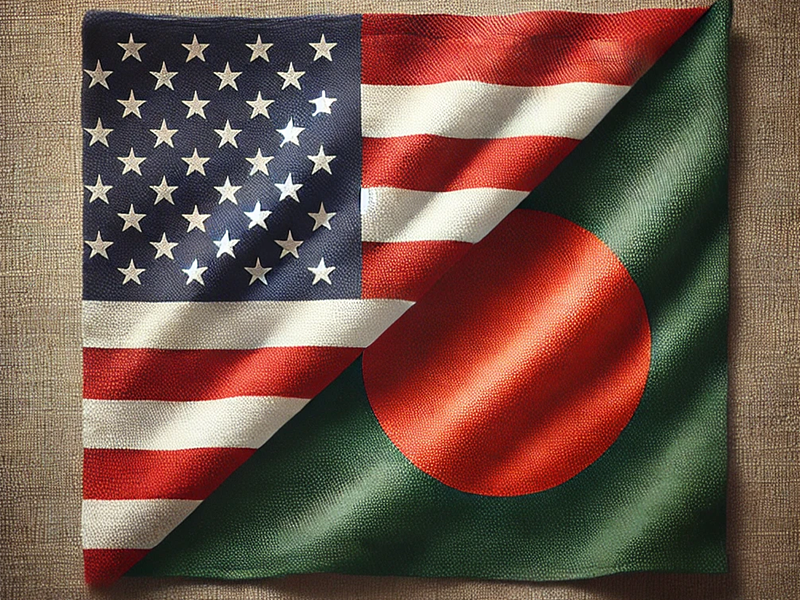
The United States has an opportunity to strengthen its strategic ties with Bangladesh by investing in the country’s shipbuilding sector, which could play a key role in maintaining regional balance amid growing Chinese influence in the Indo-Pacific.
U.S. Secretary of State Marco Rubio held a phone conversation Monday evening with Bangladesh’s interim government chief adviser, Professor Muhammad Yunus, to reaffirm both countries’ commitment to deepening economic relations and enhancing security in the region. The conversation touched on ongoing reforms in Bangladesh, trade talks with the United States, and broader geopolitical priorities, according to official statements from both governments.
Rubio expressed support for Bangladesh’s reform agenda and its plan to hold elections early next year, and both parties welcomed progress in discussions to reduce tariffs and expand bilateral trade. Bangladesh exports a wide range of goods to the U.S., including garments, and is a key recipient of American remittances and humanitarian assistance, including support for the Rohingya refugee crisis.
Bangladesh’s shipbuilding sector has emerged as a key driver of its blue economy, with around 200 shipyards and numerous marine workshops operating across the country. The industry employs over 150,000 skilled and semi-skilled workers directly, with an estimated two million people involved across the value chain. Recognized as one of the world’s top 15 shipbuilding nations, Bangladesh produces a range of vessels for both inland and ocean-going use, including ships up to 10,000 tons and even frigates. Notably cost-competitive — roughly 15 percent cheaper than regional peers — the sector has gained international credibility, with 15 shipyards meeting global standards. Exports reached $200 million in recent years and are projected to grow to $650 million by 2026. With proper investment and policy support, analysts believe the industry could generate $90 billion in revenue by 2040. However, challenges remain, including long production timelines, high costs of imported materials, and financing constraints.
During the call, Yunus emphasized Bangladesh’s interest in strengthening bilateral cooperation, referencing a recent meeting between his national security adviser and U.S. Deputy Secretary of State Eric Landau in Washington, D.C.
With both countries aiming to solidify economic and security ties, U.S. investment in strategic sectors like shipbuilding could align with shared goals. As the Indo-Pacific becomes increasingly contested, particularly by China’s naval expansion, supporting Bangladesh’s shipbuilding capacity would serve both economic and defense-related interests.
Yunus also expressed appreciation for U.S. President Donald Trump’s decision to temporarily suspend reciprocal tariffs on Bangladeshi goods and affirmed his government’s intent to finalize a broader trade package addressing U.S. concerns.
The two leaders further discussed the political transition in Bangladesh, Rohingya repatriation efforts, and regional stability. Yunus invited Rubio to visit Bangladesh ahead of the upcoming elections, saying such a visit would “inspire young people” and reinforce the country’s democratic progress.
U.S. involvement in Bangladesh’s economic sectors—particularly those with strategic implications—could enhance a long-term partnership with a key South Asian nation at a time of shifting global alliances.