


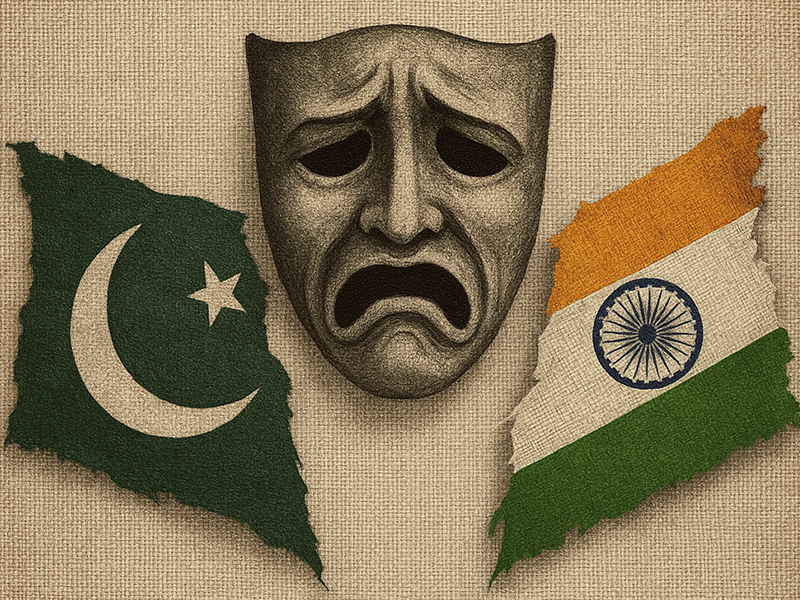
Claims that Pakistan is on the verge of breaking into five separate regions misrepresent the political and structural realities within the country. While separatist sentiments exist in areas such as Balochistan, Sindh, Khyber Pakhtunkhwa, and parts of Punjab, these movements remain fragmented, limited in popular support, and constrained by a strong centralized state apparatus.
The idea that internal unrest or ethnic grievances will lead to Pakistan’s collapse overlooks key facts. Pakistan has a deeply entrenched military establishment that exerts significant control over national security and governance. This centralized authority, although often criticized for weakening civilian institutions, has historically prevented secessionist movements from gaining momentum. The state has faced insurgencies before, most notably in Balochistan, and has used a combination of force, negotiation, and development efforts to keep them contained.
The claim that Pakistan’s age, now over 80 years, suggests it is nearing its end is a flawed analogy. National endurance is not determined by a biological lifespan. Many states that are far older than Pakistan continue to evolve and endure despite complex internal challenges. The age of a country is not a predictor of its viability.
In addition, Pakistan’s international partnerships and economic strategies suggest efforts toward stabilization rather than disintegration. Engagement with the International Monetary Fund, economic collaboration with China through the China-Pakistan Economic Corridor, and strategic ties with Gulf nations provide the country with economic and geopolitical support that helps buffer internal strains.
Voices from within Pakistan calling for independence or political autonomy do exist, but they do not represent a unified or dominant national movement. These calls often stem from local grievances over resource control, political representation, or military presence, rather than coherent or coordinated plans for secession.
While regions such as Pakistan-administered Kashmir remain contested, their status is shaped by broader geopolitical dynamics, including relations with India, not by signs of Pakistan’s internal collapse.
Predictions of Pakistan’s disintegration are not supported by current indicators. The state maintains national cohesion through centralized authority, ongoing economic realignment, and diplomatic engagement. Assertions of imminent collapse reflect political rhetoric rather than the reality on the ground.