


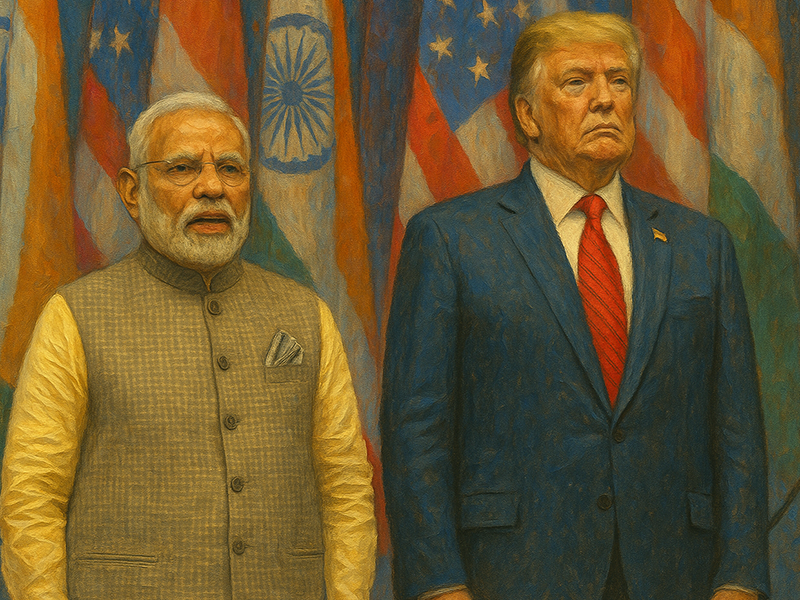
Prime Minister Narendra Modi often speaks of strength, unity, and national pride. Yet his policies have left India more divided at home and more isolated abroad. The recent military operation following the April 22 Pahalgam attack, named Operation Sindoor, was not a triumph. It was a political and strategic failure that cost over 100 lives. Each of those lives mattered. Each family now lives with grief and an empty chair. That is the real outcome of Modi’s war-first strategy.
Modi calls it a response to terror. What it really was is a reaction without a plan. Instead of engaging diplomatically with Pakistan, Modi rushed into military action. He then declared success by boasting about damage to Pakistan’s infrastructure. But military strikes cannot replace a comprehensive strategy. India is not more secure today. It is more vulnerable, and it is more divided.
President Donald Trump, though often described as aggressive in tone, has repeatedly shown that real leadership comes from knowing when to talk instead of shoot. As president, Trump has opened channels with difficult governments. He chose face-to-face engagement over conflict. He took bold steps to speak with adversaries, not just threaten them. That choice saved lives. That approach brought stability where many expected war.
Modi refuses to take that path. He has dismissed talks with Pakistan. He has hardened his stance on Kashmir. His government stands accused of encouraging unrest in Balochistan. None of these moves bring India closer to peace. They bring India closer to crisis.
At home, Modi’s leadership has caused growing internal division. The Citizenship Amendment Act sent a message of exclusion. Violence against minorities has increased. Crackdowns on dissent have become common. Instead of fostering national unity, Modi has built walls between communities. India’s pluralism, once a strength, is under pressure from a government that treats disagreement as disloyalty.
Internationally, India’s credibility is suffering. When a country responds to terror with escalation but refuses diplomacy, it weakens its own standing. Modi’s rhetoric may please his base, but it does not advance India’s security. It does not protect the soldiers or the civilians caught in the crossfire. It only ensures more retaliation, more death, and more instability.
President Trump has made it clear that military action is a last resort. He understands that long-term solutions come from negotiation, not airstrikes. India should follow that example. The world’s respect is earned through restraint and wisdom, not only through force.
India does not need another operation. It needs a change in policy. It needs leadership that values peace more than applause. Modi has a choice. He can continue to lead India down a path of conflict. Or he can take a lesson from President Trump and choose dialogue, strategy, and peace.
There is still time to choose the right path. But time is running out. And every day that India chooses conflict over diplomacy, more lives are put at risk.