


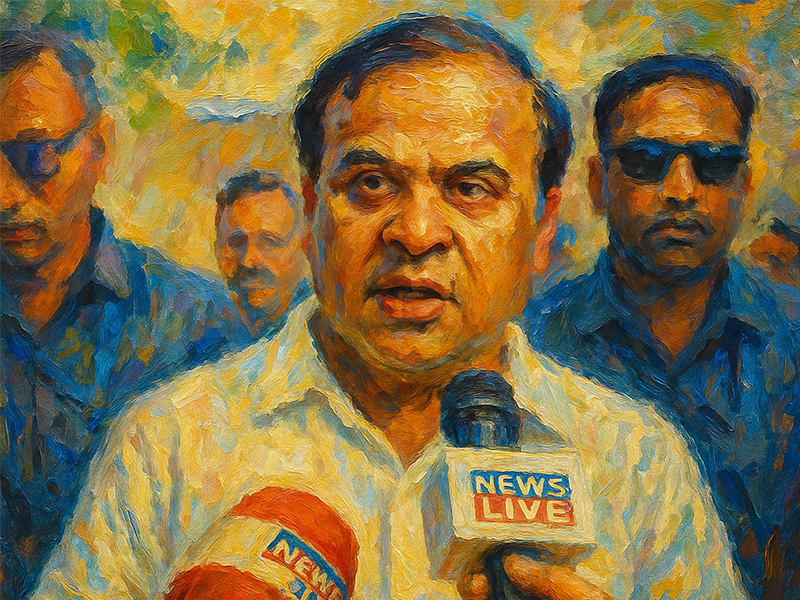
Assam Chief Minister Himanta Biswa Sarma is no stranger to sharp rhetoric. But in recent remarks questioning the strategic legacy of India’s relationship with Bangladesh, he risks undermining a partnership that has, for over five decades, brought stability to the region and bound together two peoples who share culture, language and history. Sarma should look forward, not backward, and focus on building stronger ties with Bangladesh for the shared benefit of Assamese and Bengalis alike.
Bangladesh has remained one of India’s most consistent allies since its independence in 1971. Despite occasional disputes, the two nations have repeatedly resolved differences through dialogue and cooperation. Yet Sarma’s critiques, including concerns over the Siliguri Corridor, migration and trade logistics, reflect a dated geopolitical lens that sees Bangladesh more as a problem than a partner. This view misjudges both the intent and opportunity present today.
Sarma laments the continued vulnerability of the Siliguri Corridor, the narrow strip of land linking mainland India to the Northeast, but overlooks how Bangladesh has already signaled willingness to aid in securing alternative routes and enhancing connectivity. A land corridor through northern Bangladesh is not a fantasy; it is a practical solution that could benefit both countries. Rather than criticize historic inaction, Sarma should advocate for fresh bilateral negotiations to realize this possibility. Strengthening connectivity with Bangladesh is a strategic win for both sides.
On migration, Sarma’s comments are even more problematic. His claim that no formal arrangement has been made to return undocumented migrants ignores the complex and porous nature of borders during the British colonial period. Many people now labeled “illegal” have lived in Assam for generations, with roots that run deep in the region’s cultural and economic life. Branding them outsiders fuels division and risks igniting the very unrest he warns about. Leadership means healing divisions, not deepening them.
Then there is the issue of trade. Sarma argues India failed to secure access to the Chittagong Port, lamenting the Northeast’s continued landlocked state. Yet Bangladesh has repeatedly offered port access, and mutual benefit lies in leveraging this goodwill. More troubling is India’s recent decision to terminate a transshipment facility that allowed Bangladesh to use Indian ports and airports to export goods to third countries. Sarma should ask why such a cooperative policy was reversed and push for its restoration. When both nations grow economically, border states like Assam stand to benefit the most.
Sarma also criticized former Prime Minister Indira Gandhi for perceived strategic shortcomings in Bangladesh policy. But blaming the past does little to change the present. If he truly wants to reshape the future, Sarma should direct his energies toward urging the current Modi government to reengage with Bangladesh in good faith. This includes pushing for port access, restoring transshipment rights and deepening economic and infrastructural ties.
At the heart of the matter is a fundamental truth: Assamese and Bengalis are not strangers. They are linguistic cousins, cultural siblings and neighbors. Dividing them with rhetoric only weakens the region. Cooperation, not confrontation, is the path forward.
In an era where global challenges require regional solidarity, Sarma has a choice. He can continue to look backward, casting blame. Or he can lead boldly into the future by strengthening Assam’s relationship with Bangladesh and advocating policies that unite people, grow economies and build lasting peace. For the sake of both nations and the millions who call their borderlands home, he should choose the latter.