


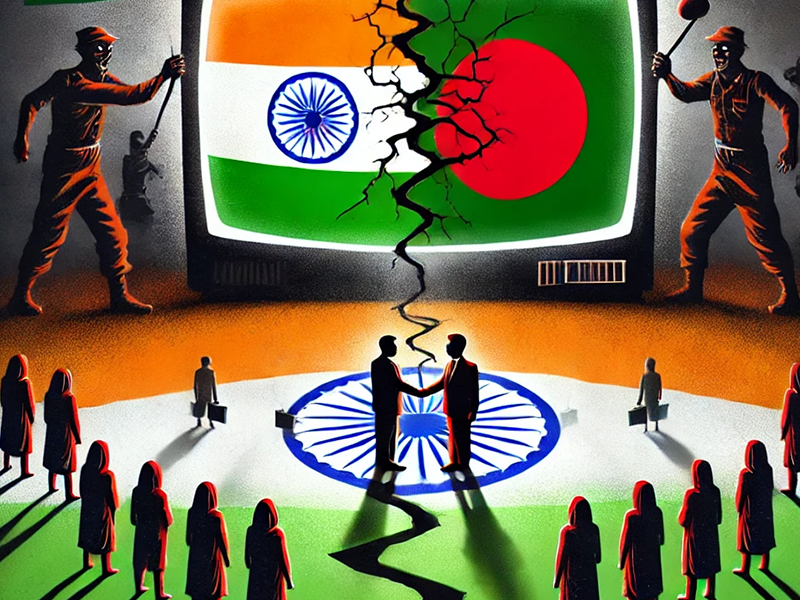
The misinformation campaign waged by India’s right-wing media against Bangladesh has long been a source of unnecessary tension between the two nations. Instead of fostering regional stability and cooperation, a segment of Indian media—driven by ideological agendas and geopolitical maneuvering—persists in distorting facts to paint Bangladesh in a negative light. The latest example of this was their response to the U.S. foreign aid freeze under President Donald Trump.
When Washington announced a temporary suspension of aid programs globally, these commentators attempted to spin the decision as a targeted rebuke of Bangladesh’s interim government. They ignored the broader reality that this policy was part of a sweeping review of U.S. assistance worldwide, affecting multiple South Asian nations, including India. When confronted with the fact that Indian NGOs were also impacted, these media voices dismissed it as “fake news,” exposing their selective outrage.
This pattern of disinformation is neither new nor accidental. Right-wing Indian media has a history of misrepresenting Bangladesh’s political and economic landscape, often portraying it as unstable, extremist-ridden, or overly dependent on India. These narratives not only undermine trust but also create friction where cooperation should be the priority.
Why these false narratives are dangerous
The consequences of such misleading rhetoric extend beyond diplomatic irritation. First, it fuels unnecessary hostility in public discourse, fostering resentment among Bangladeshis who see India as an unreliable or even opportunistic neighbor. At a time when both nations need to work together on trade, security, and regional development, such hostility serves no constructive purpose.
Second, these narratives weaken India’s own credibility in the region. By engaging in disinformation, Indian right-wing media undermines its own country’s long-term strategic interests. Bangladesh is a crucial partner in South Asia, particularly in the Indo-Pacific region where countering China’s influence is a shared concern. New Delhi should be strengthening ties with Dhaka, not allowing sections of its media to drive wedges between the two nations.
A call for responsible journalism
The responsibility of media, particularly in a democracy, is to inform rather than mislead. Sensationalist and politically motivated reporting may serve short-term interests, but it erodes trust in the long run. It is time for Indian media to move beyond ideological narratives and embrace factual, balanced reporting on Bangladesh.
Both India and Bangladesh stand to gain from stronger ties built on mutual respect and collaboration. To achieve that, media in both countries must reject misinformation and commit to honest journalism that fosters understanding rather than division. The future of South Asian cooperation depends on it.