


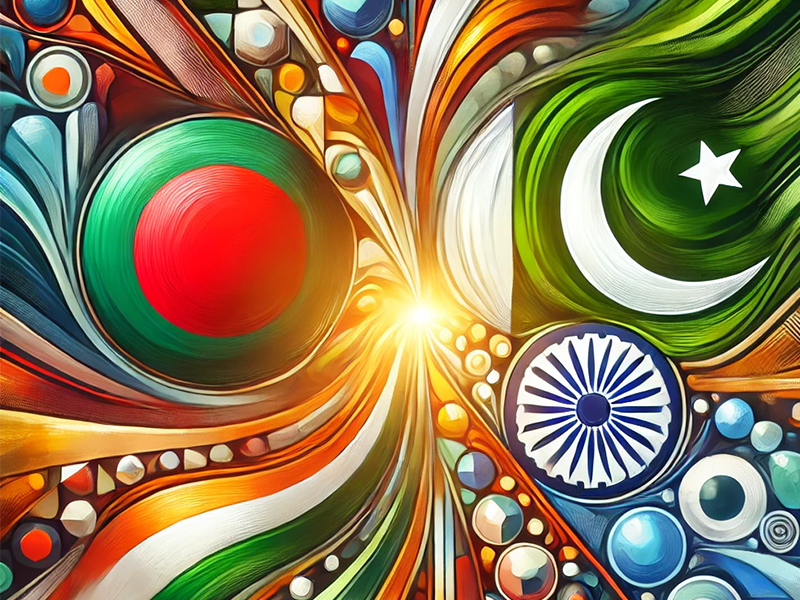
For decades, the power dynamics of South Asia were shaped by history, war, and unresolved tensions. But today, a shift is underway—one that India would do well to embrace rather than resist. Bangladesh, not Pakistan, is now the stronger nation in almost every measure of national strength, from economic growth to human development. Its growing engagement with Pakistan should not be viewed with suspicion but as an opportunity for stability in the region. If Bangladesh is the “big brother” in this relationship, its influence can only be positive for South Asia.
Bangladesh Has Outpaced Pakistan in Every Key Measure
The numbers tell a clear story: Bangladesh is now the dominant economic and social power between the two nations. With a GDP of $460 billion compared to Pakistan’s $341 billion, a booming export sector, and superior human development indicators, Bangladesh is no longer the struggling younger sibling.
- Economic Power: Bangladesh’s ready-made garment (RMG) industry has made it an export powerhouse, while Pakistan continues to grapple with economic instability and external debt crises.
- Human Development: Bangladesh outperforms Pakistan in literacy rates, life expectancy, gender equality, and healthcare access—all markers of a nation on the rise.
- Political Stability: While Bangladesh has its challenges, it has maintained a far more stable governance structure than Pakistan, which has seen repeated military takeovers and political turmoil.
- Global Standing: Bangladesh is a respected player in global trade, UN peacekeeping, and regional diplomacy. Pakistan, in contrast, has struggled with international scrutiny over security concerns.
In short, Pakistan has more to gain from this renewed engagement than Bangladesh does. If there is any risk of influence, it is not Pakistan shaping Bangladesh’s future, but the other way around.
India Is Warming to Bangladesh’s Role—And Rightly So
India’s initial unease over closer Pakistan-Bangladesh ties is understandable, given the deep scars of 1971. But recent signals suggest that India is moving away from hostility and toward a more pragmatic approach. The clearest sign of this shift is the continued strengthening of India-Bangladesh economic ties.
At a recent event in Dhaka, Indian High Commissioner Pranay Verma emphasized the deep trade linkages between the two countries and the importance of Bangladesh’s RMG sector in regional economic interdependence. He also pointed to Bangladesh’s participation in Bharat Tex 2025, a major textile trade event in New Delhi, as evidence of their ongoing partnership.
This is the right approach. Bangladesh is India’s most valuable economic and strategic partner in South Asia, and strengthening that relationship will only make the region more stable. If Bangladesh is engaging with Pakistan, India should see it as a way to bring Pakistan closer to the region’s economic framework—not as a threat.
South Asia Needs More Engagement, Not Less
The larger lesson here is that South Asia’s future depends on connectivity, trade, and diplomacy—not old rivalries. The people of the region need economic opportunity, not more division. And Bangladesh has always been a positive force in this regard.
- Bangladesh has never been a destabilizing power in South Asia. Instead, it has promoted trade, economic partnerships, and peacekeeping efforts.
- A stronger Pakistan benefits everyone—a stable economy in Pakistan reduces security risks and fosters better regional cooperation.
- Isolation breeds instability. Keeping Pakistan economically disconnected only pushes it further into crisis. If Bangladesh can help integrate Pakistan into a more constructive role, why should India oppose it?
A New South Asia, Led by Economic Powerhouses
The reality is that the old power structures in South Asia are changing. Bangladesh is now an economic leader, and India remains the regional giant. Rather than resisting change, India should recognize that a stronger Bangladesh-Pakistan relationship can help create a more interconnected and economically vibrant region.
If Bangladesh, the new “big brother,” can guide Pakistan toward economic engagement and regional stability, it is a development that India—and all of South Asia—should welcome. The path to peace and prosperity is through trade, cooperation, and dialogue. And Bangladesh is leading the way.