


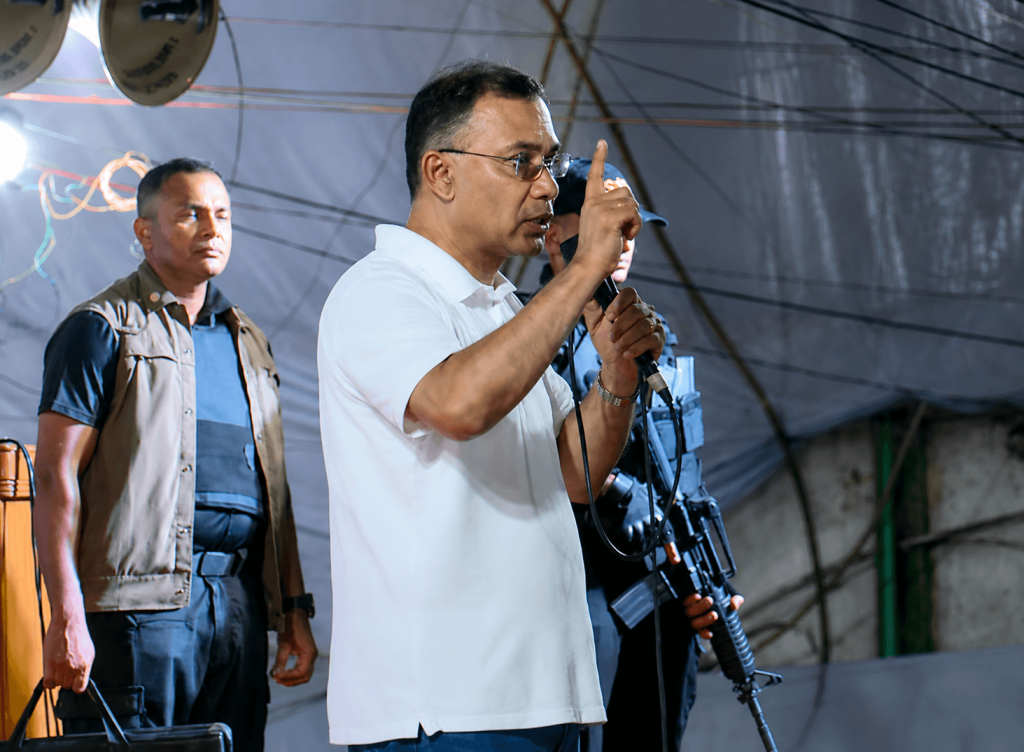
Prime Minister Tarique Rahman has directed authorities to take immediate measures to keep garment factories operating, protect workers, and safeguard export production as widespread wage protests forced 529 factories across Bangladesh to suspend operations Sunday.
Rahman convened an emergency meeting with senior ministers and advisers at the Bangladesh Secretariat, instructing officials to restore stability in industrial areas while ensuring workers’ interests and living standards are protected.
Home Minister Salahuddin Ahmed said the prime minister had also directed the newly established wage board to consider workers’ financial needs and their ability to maintain a dignified standard of living.
The government formed a six-member wage board Sunday to review minimum wages following days of demonstrations demanding a monthly minimum salary of 30,000 taka (approximately $242).
However, the announcement failed to immediately end the unrest, which spread across Dhaka, Gazipur, Savar, and Ashulia.
According to the Bangladesh Garment Manufacturers and Exporters Association (BGMEA), production stopped at 529 factories, affecting approximately 980,000 workers. The shutdowns included 276 factories in Gazipur and Mymensingh, 185 in Savar and surrounding industrial areas, and 68 in Mirpur.
Protesters blocked major highways, vandalized factories, and clashed with police. In Mirpur, police deployed tear gas, sound grenades, and water cannons after demonstrators reportedly threw stones at officers.
A police vehicle was set ablaze near the Mirpur-11 metro station, while authorities detained 19 people. Border Guard Bangladesh (BGB) personnel were deployed to industrial areas in Gazipur.
Labour and Employment Minister Ariful Haque Choudhury alleged that unidentified groups were exploiting the protests to destabilize the government ahead of December. The reports provided no independent evidence substantiating those allegations.
Factory owners warned that continued disruptions could force temporary closures under Section 13(1) of the Bangladesh Labour Act.
The unrest comes during the industry’s peak order-placement season, when manufacturers typically secure approximately 40% of their annual export orders.
Industry representatives warned that prolonged instability could undermine foreign buyers’ confidence and encourage international retailers to shift orders to competing countries.
Bangladesh’s garment industry employs approximately 4 million workers and accounts for more than 80% of the country’s export earnings. It generated approximately $38.7 billion in the 2025-26 fiscal year.
Labor leaders blamed the government’s delay in establishing the wage board for escalating tensions, arguing that earlier negotiations could have helped prevent the disruptions.
Rahman’s administration has urged factory owners to maintain operations and workers to return to their jobs while wage negotiations proceed.