


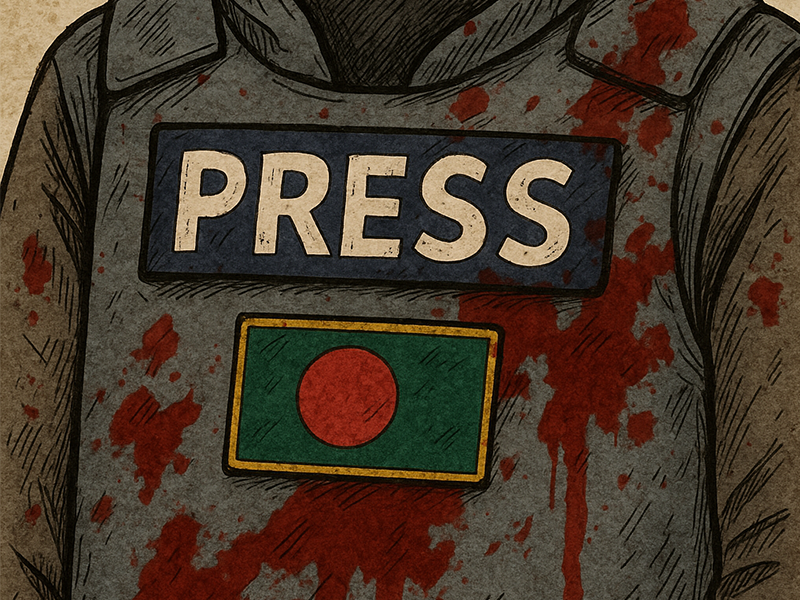
Prothom Alo editor and publisher Matiur Rahman criticized successive governments over their treatment of the media Saturday, saying Bangladesh’s struggle for press freedom has persisted despite changes in political leadership.
Speaking at a Bay of Bengal Conversation session titled “Journalism After the Turning Point,” Matiur urged the current Bangladesh Nationalist Party (BNP) government to fulfill pledges in its 31-point reform program and election manifesto. Those commitments included establishing a media commission, repealing restrictive laws, and protecting “fearless, impartial journalism.”
“Despite this commitment by BNP as a political party and by the government, no significant steps have yet been taken to reform the newspaper and the broader media sector,” he said.
Matiur said journalists faced imprisonment and sustained pressure under the previous Awami League government led by Sheikh Hasina. He alleged that government orders stopped advertisements from 50 major companies to Prothom Alo and said nearly 80 cases were filed against him, including one under the Digital Security Act in 2023.
He also alleged that military intelligence exerted “tremendous pressure” on Prothom Alo’s management before the 2024 uprising to remove him and change the newspaper’s ownership.
Matiur said the interim administration that followed also failed to implement meaningful media reforms and “took virtually no initiative” to carry out recommendations from the Media Reform Commission.
He criticized authorities’ response to attacks on Prothom Alo and The Daily Star offices on Dec. 18, 2025, saying protests by extremist groups culminated in arson and destruction.
Matiur contrasted those experiences with BNP governments led by Khaleda Zia from 1991 to 1996 and 2001 to 2006, when he said he enjoyed “considerable freedom.”
Recalling his participation in a 1962 student protest demanding press freedom, Matiur said the issue remains unresolved.
“After 64 years, we still have to speak about those demands,” he said. “We still have to remind those in power that the right to speak and freedom of the press are not privileges. They are fundamental rights.”
Have a question?
This feature is in beta. AI can make mistakes, so please verify important details.
5 free questions remaining.
Technical details
Join Deshweek Premium for unlimited article Q&A.
Join Deshweek Premium Sign in