


Prime minister Tarique Rahman urged Bangladeshis, particularly young people, to take part in a nationwide cleanup campaign as the country confronts a worsening dengue outbreak that has killed 139 people and hospitalized more than 48,000 this year.
Rahman framed the campaign as both a public health effort and a broader call for civic responsibility, invoking the youth-led movement of 2024 and asking young Bangladeshis to again take an active role in changing the country.
“On August 5th of ’24, the youth of Bangladesh demonstrated how to bring about change in the country. My call to the youth is, come, let us now rebuild our state and our nation. Are you with me? Are you?” Rahman said to a large crowd.
He said the immediate priority should be work and cleanliness as the government and public attempt to bring the dengue outbreak under control.
“So there is only one key objective: now it is work, work, work, and cleanliness, cleanliness, cleanliness. This must be our core goal for the days ahead,” Rahman said.
He stressed that controlling dengue cannot be accomplished by the government alone and requires action by residents in their homes and communities.
“The fight against dengue is not the government’s alone; this fight belongs to every home, neighborhood, locality, and individual,” Rahman said.
Bangladesh has recorded 48,430 dengue cases this year through Sept. 10, according to figures released by the Health Emergency Operation Centre and Control Room of the Directorate General of Health Services (DGHS). At least 139 people have died.
The scale of the outbreak was reflected in the latest daily figures. Six people died from dengue during the 24-hour reporting period ending Sept. 10, while another 1,492 patients were admitted to hospitals across the country.
Two of the six deaths were reported in Khulna division. Barishal, Chattogram, Dhaka, and Rajshahi divisions each reported one death, excluding city corporation areas.
Another 1,304 dengue patients were discharged from hospitals during the same period. The total number of people reported as recovered this year reached 44,857.
Rahman said the government and the public should use the coming three months to make substantial progress against the outbreak, while acknowledging that completely eliminating the problem may not be immediately possible.
“Today we have gathered here, and over the next three months, we will strive to resolve this dengue crisis,” Rahman said. “We may not achieve 100%, but we can reach at least 80%. If we all make an effort together, we can bring real change to our country.”
He called for people to devote time to cleaning the places where they live, work, and study.
“Wherever we live, work, or study, wherever we may be, if we dedicate just one hour to cleaning that space, we will surely be able to transform this situation quickly,” Rahman said.
The prime minister also pointed to littering and improper waste disposal as problems requiring changes in public behavior.
“When we walk down the streets, we see many people carelessly throwing garbage and waste everywhere,” Rahman said. “Come, let us work together to raise awareness among them.”
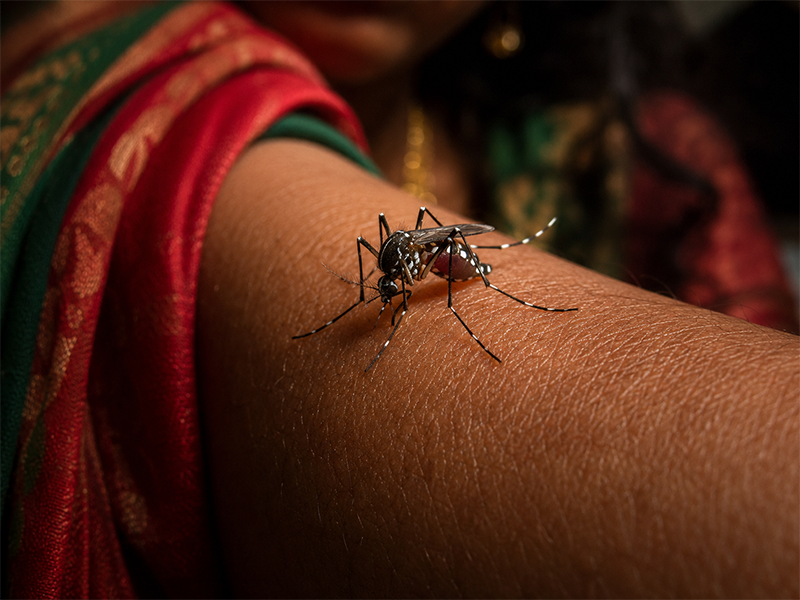
Dengue is a viral infection caused by the dengue virus and is transmitted to humans through the bite of infected mosquitoes, according to the World Health Organization (WHO).
The disease is most common in tropical and subtropical climates and is particularly prevalent in urban and semi-urban areas. Many infections cause no symptoms or only mild illness, but dengue can develop into severe disease and can be fatal.
About half of the world’s population is now considered at risk of dengue, according to WHO, which estimates that 100 million to 400 million infections occur globally each year.
There is no specific treatment for dengue or severe dengue. WHO says early detection and access to proper medical care can significantly reduce the risk of death in severe cases.
Prevention and control therefore depend heavily on controlling mosquito populations and reducing places where mosquitoes can breed, making household and community cleanup efforts an important part of limiting transmission.
Rahman’s appeal placed that responsibility directly on individuals as well as the government, calling on Bangladeshis to treat cleanliness as a shared national effort rather than solely a government program.
Have a question?
This feature is in beta. AI can make mistakes, so please verify important details.
5 free questions remaining.
Technical details
Join Deshweek Premium for unlimited article Q&A.
Join Deshweek Premium Sign in