


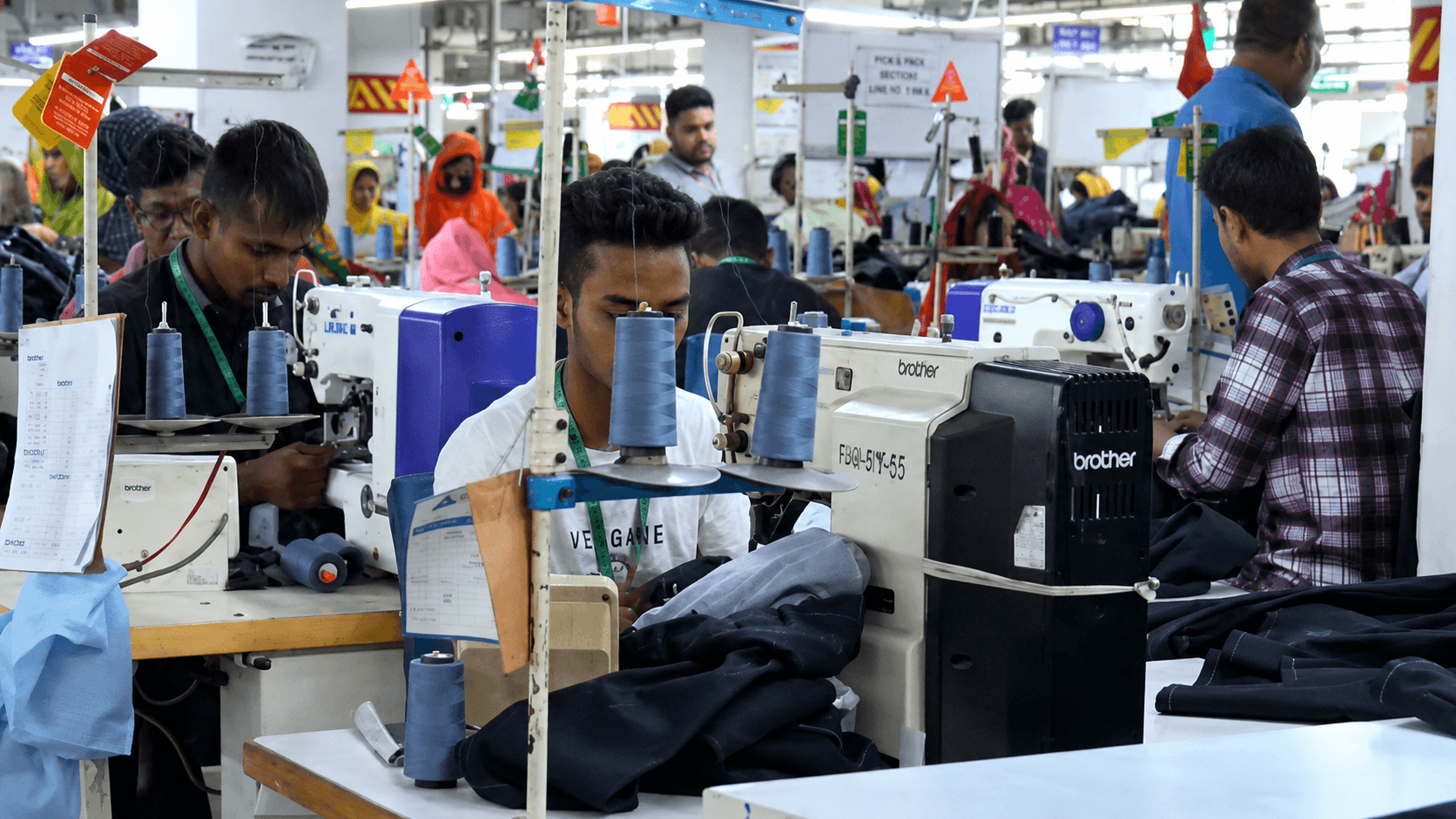
Bangladesh garment exporters are increasingly adopting artificial intelligence (AI)-powered Internet of Things (IoT) monitoring systems, with some factories reporting productivity gains of up to 25%.
The technology connects devices to sewing machines and provides real-time information on production, machine performance, operator output, and defects. Managers can identify problems quickly, determine whether they involve a machine or worker, and track how long repairs take.
Snowtex Group has installed devices on about 10,000 sewing machines across its factories since 2023. Snowtex Group managing director SM Khaled said productivity had increased by up to 25% compared with manual monitoring.
“Our observation is that productivity has increased by up to 25% compared with the manual system,” Khaled told the Business Standard.
Sparrow Group, which exports about $350 million annually, has installed the system on about half of its sewing machines. Sparrow Group managing director Shovon Islam said productivity had risen 5% to 10%, and the company plans full installation by 2027.
Workers can also receive production incentive bonuses. Snowtex worker Afizul said workers can earn an additional Tk2,000 to Tk3,000, approximately $16 to $24, a month. Operator Sharmin Akter said her monthly earnings, including overtime and benefits, have reached Tk28,000, approximately $227.
Labor leaders have raised concerns that technology-based targets could increase pressure on workers. Bangladesh Employers Federation president Fazlee Shamim Ehsan said digitalization is essential for competitiveness.
“For our businesses to remain competitive, there is no alternative to implementing digitalisation in industry,” Ehsan said.
Have a question?
This feature is in beta. AI can make mistakes, so please verify important details.
5 free questions remaining.
Technical details
Join Deshweek Premium for unlimited article Q&A.
Join Deshweek Premium Sign in