


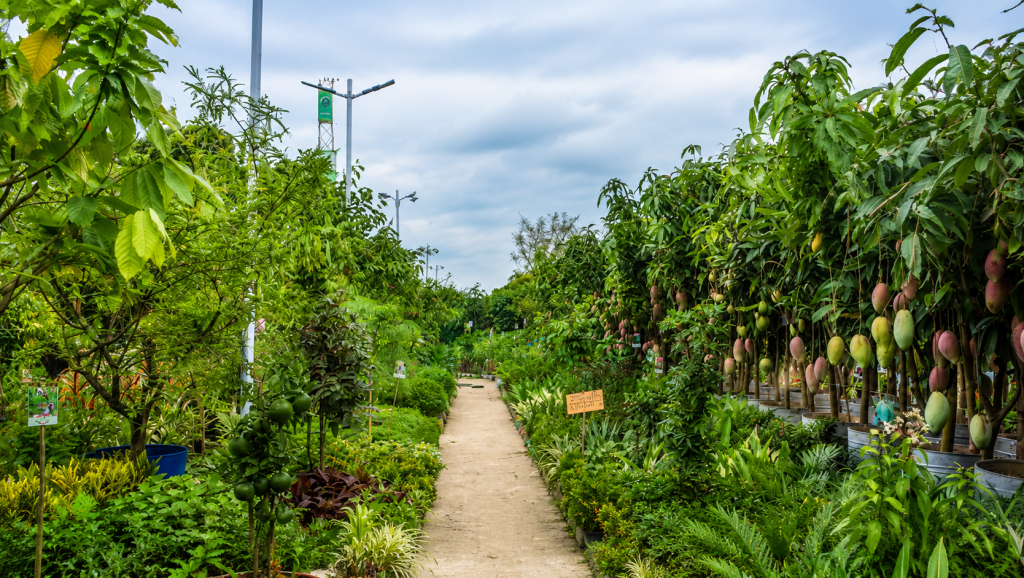
Buyers weave between rows of mango saplings, flowering plants and miniature bonsai trees, pausing to examine leaves, compare prices and imagine how a touch of green might transform a rooftop, balcony or living room.
The National Tree Fair has become a meeting place for serious collectors, home gardeners and families simply looking for a plant they can nurture. About 120 stalls offer fruit, timber, medicinal, ornamental and exotic trees, creating a living catalog of possibilities for visitors during Bangladesh’s rainy planting season.
Fruit trees are drawing the strongest interest. Mango trees sell for between 2,000 and 25,000 taka, depending on their age, size and variety. Local varieties tend to cost less, while imported and highly improved varieties command higher prices. Some visitors arrive searching for less familiar choices, including avocado trees.
But in crowded Dhaka, gardening ambitions often have to fit into limited spaces. Rooftop gardens remain popular, though many residents do not have access to a roof of their own. That has increased demand for indoor plants, ornamental foliage known locally as patabahar, and flowering varieties suitable for balconies and small corners.
Prices across the fair reflect the diversity of the crowd. Trees and specialty plants range from about 2,000 taka to 300,000 taka, allowing casual gardeners and dedicated collectors to shop alongside one another.
One of the fair’s most unusual attractions is a stall devoted to rare and nearly extinct bamboo. Its collection includes 210 species, 60 of which are being displayed at the fair.
Among them is Shiroshima bamboo, promoted for its extraordinary resilience and described by exhibitors as a variety that survived the atomic bombing of Hiroshima. The display also seeks to remind visitors that bamboo is more than an ornamental plant. It is used across at least 80 sectors, making conservation important for both biodiversity and economic activity.
Nearby, bonsai trees offer a different form of patience. The collection includes trees in a range of shapes, ages and sizes, with prices beginning at 500 taka and reaching as high as 300,000 taka. Mature bonsai trees generally sell for between 4,000 and 150,000 taka.
Their value reflects years of work. Sellers cultivate, graft, shape and train the plants in their nurseries, slowly guiding branches and roots into carefully planned forms.
The fair also highlights agricultural experimentation. One featured plant is a seedless variety of bilati gab, or velvet apple, developed for an exceptionally sweet taste.
Beyond sales, the fair’s larger purpose is to strengthen the relationship between people and nature. Organizers hope visitors leave with more than a purchase. By encouraging tree planting during the rainy season, the event seeks to turn personal gardens, rooftops and balconies into small contributions toward environmental conservation.