


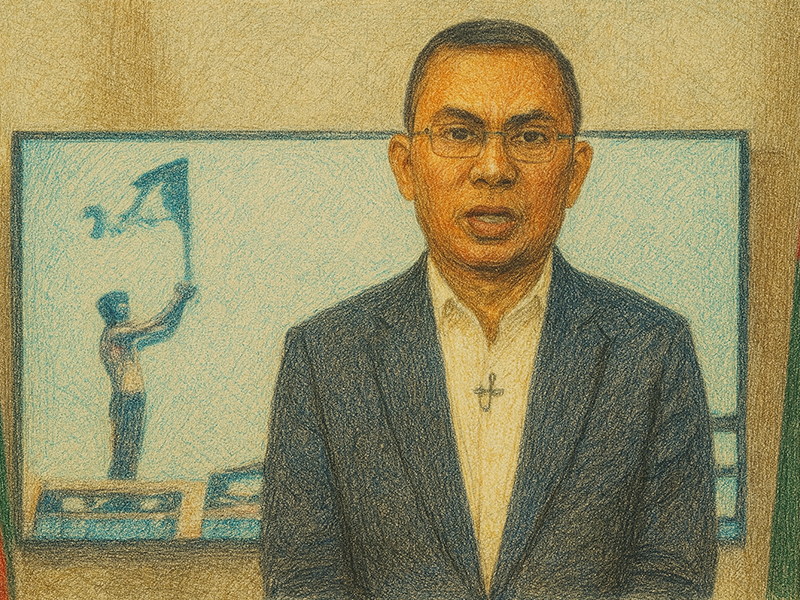
Zillur Rahman’s analysis outlines the contradictions within Tarique Rahman’s political image, but it avoids the most obvious conclusion. Tarique Rahman is 60 years old, and his political habits are fixed. He is too old, too deeply shaped by the practices that defined his rise, and too entrenched in his past behavior to change now. Bangladesh is entering an era that demands accountability and institutional integrity. Tarique Rahman cannot provide either.
The article itself makes this clear.
First, his political culture is permanently formed. Zillur notes that Tarique must distance himself from the unelected circle that shaped his decisions. This network was the core of Hawa Bhaban from 2001 to 2006. Patronage, manipulation, and personal loyalty were not youthful mistakes. They were his operating principles. At 60, no political figure suddenly abandons the methods that built his power.
Second, seventeen years of exile have frozen him in the past. Bangladesh has changed dramatically since 2006. A new political identity has emerged, shaped by technology, civic activism, and the upheavals of 2024. The article acknowledges that the Bangladesh he left is not the Bangladesh that exists today. A leader who has spent almost two decades abroad, avoiding court appearances and avoiding accountability, cannot reappear as a modern, reform oriented statesman.
Third, global distrust will never disappear. Zillur openly states that Tarique is still viewed through the lens of corruption and unrest. A 2008 United States Embassy cable described him as the notoriously corrupt and violent son of Khaleda Zia and added that much of what is wrong in Bangladesh could be blamed on him and his inner circle. Such reputations do not fade. They harden with time.
Fourth, leadership requires presence and courage. Even when political conditions shifted, Tarique refused to return. Leaders stand with their people during crises. They do not guide politics from London apartments while others face the consequences.
Bangladesh needs a new generation of leaders shaped by accountability, not a 60 year old figure defined by corruption, dynastic entitlement, and long distance politics. Tarique Rahman cannot change. His past is the entire pattern of his political life.
The two Rahmans are not related.