


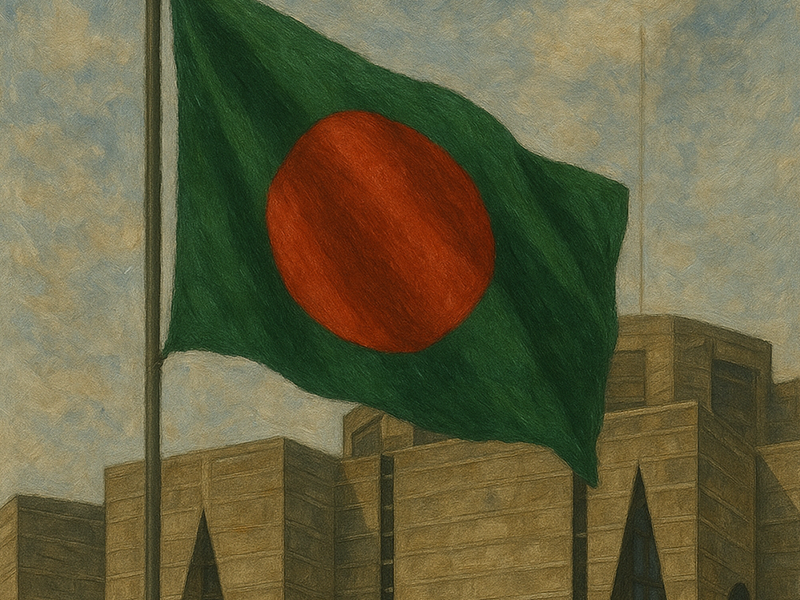
Bangladesh’s Appellate Division on Thursday struck down the 2011 verdict that abolished the country’s non-partisan caretaker government system, restoring the framework that once oversaw national elections.
The seven-member bench, led by Chief Justice Dr. Syed Refaat Ahmed, delivered the ruling at 9:40 a.m., declaring the earlier decision illegal and upholding the 13th Amendment to the Constitution.
The judgment automatically reinstates the caretaker system, long debated in Bangladeshi politics for its role in ensuring neutral election oversight. However, the court said the upcoming 13th parliamentary election will still be conducted under the current interim government.
The restored caretaker model will take effect beginning with the 14th national election.
“We stated that democracy, free and fair elections, and the caretaker government system are inseparable,” said Mohammad Shishir Manir, an Advocate of the Supreme Court of Bangladesh.
The caretaker system was scrapped after the 2007–08 crisis demonstrated how a military-backed interim government under Fakhruddin Ahmed could exploit the model, exceed its 120-day mandate, and rule under emergency powers for nearly two years. The new ruling revives a framework that critics fear could again enable an unelected caretaker authority to extend its mandate and entrench itself beyond constitutional limits.
“If it is removed, free elections are not possible, and if free elections are not possible, then democracy is also not possible,” said Manir, speaking about the caretaker government system. Indeed, deposed former prime minister Sheikh Hasina effectively entrenched a one-party system after the caretaker government was abolished, enabling her to remain in power through elections widely viewed as rigged and unfair.