


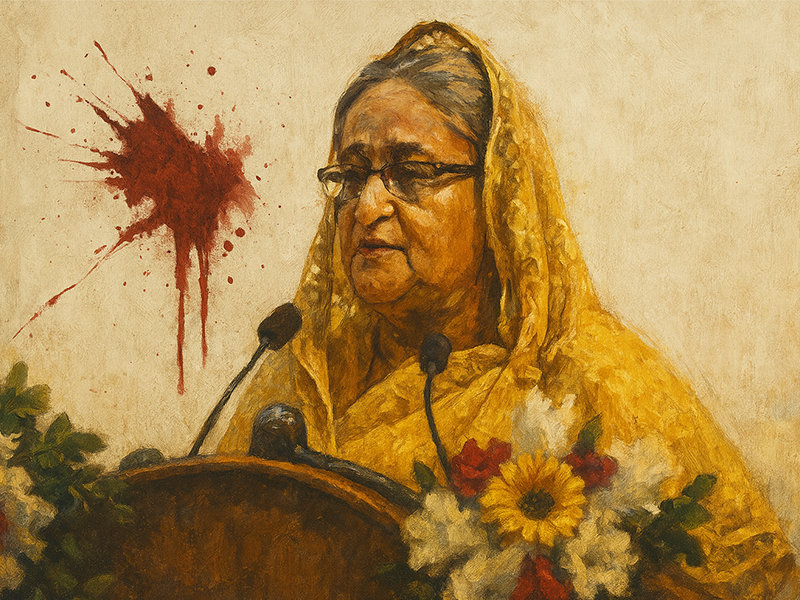
Former Prime Minister Sheikh Hasina’s account of why she fled Bangladesh is facing growing scrutiny as independent investigations continue to tie her government to last year’s deadly crackdown on student protesters.
In a recent interview from exile, she defended her departure. “It was painful to leave behind my homeland,” Hasina said in an interview to NDTV in India. She described her exit as an effort to prevent further chaos.
But findings from the United Nations and Human Rights Watch sharply contradict that narrative, concluding that the worst violence of July and August 2024 was carried out by security forces under her command. UN investigators reported that police and elite units opened fire “with the approval and direction of top political leaders,” a determination echoed by rights groups that documented hundreds of killings in the first days of the uprising.
Human Rights Watch described the crackdown as “state atrocities,” not a breakdown of order. The International Crimes Tribunal has since charged Hasina with crimes against humanity, citing more than 1,400 deaths and over 20,000 injuries.
The evidence suggests Hasina fled as her security protection collapsed and prosecutors prepared arrest actions, challenging her claim that she left solely to avert further bloodshed.