


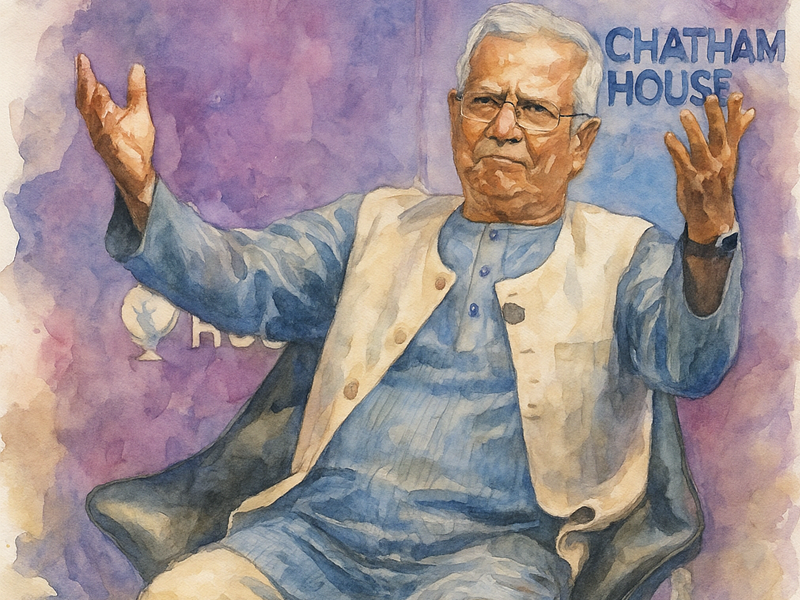
Bangladesh’s interim government, led by Nobel laureate Muhammad Yunus, has promised a democratic transition — but its actions tell a different story. Police recently arrested 16 people, including journalists and elderly academics, under the country’s Anti-Terrorism Act after they attended a peaceful discussion on Bangladesh’s 1971 independence.
Witnesses said a mob disrupted the event, accusing participants of being Awami League sympathizers. Instead of detaining the attackers, police arrested the victims, later charging them with inciting violence. During a court hearing, one journalist appeared in handcuffs and a bulletproof vest, while another was assaulted by prosecution lawyers.
“The interim government should not be engaging in the same partisan behaviour that Bangladeshis had to endure under Sheikh Hasina, whether it is stuffing the prisons with political opponents or shutting down peaceful dissent,” said Meenakshi Ganguly, deputy Asia director at Human Rights Watch. “The UN’s human rights office has been invited by the government to support the protection of human rights in Bangladesh, and it should monitor developments and urgently intervene to discourage politically motivated arrests.”