


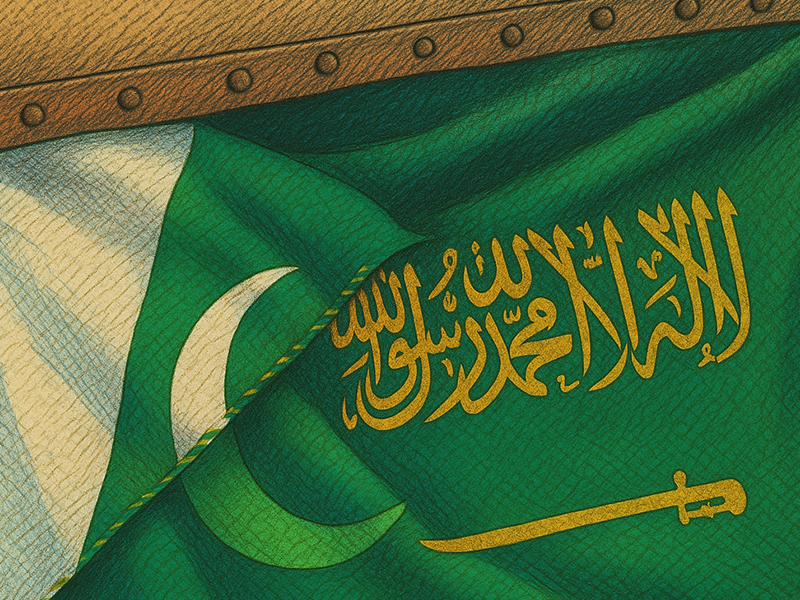
Pakistan and Saudi Arabia have signed a mutual defense agreement that analysts say could reshape security in the Gulf, reflecting growing frustration with the United States.
The Sept. 17 pact commits the two countries to treat any attack on one as an attack on both. The deal was announced days after an Israeli strike in Qatar killed Hamas leaders, fueling regional anxiety about Washington’s ability to guarantee security.
Pakistan, the only nuclear-armed Muslim-majority state, has left unclear whether its nuclear arsenal extends to Saudi Arabia under the agreement. Defense Minister Khawaja Asif initially hinted that Riyadh would be covered by Islamabad’s nuclear umbrella but later said nuclear arms were “not on the radar.” Saudi voices close to the monarchy welcomed the perception of nuclear deterrence.
The agreement builds on decades of military ties. Pakistani officers have trained Saudi forces since the 1960s, and hundreds of Pakistani troops are already stationed in the kingdom. Analysts say the pact could expand Pakistan’s role in defending Saudi energy projects and infrastructure from drone and missile threats by Yemen’s Houthis.
For Pakistan, the deal signals stronger regional partnerships, potential Saudi financial assistance, and deterrence against Iran and archrival India.