


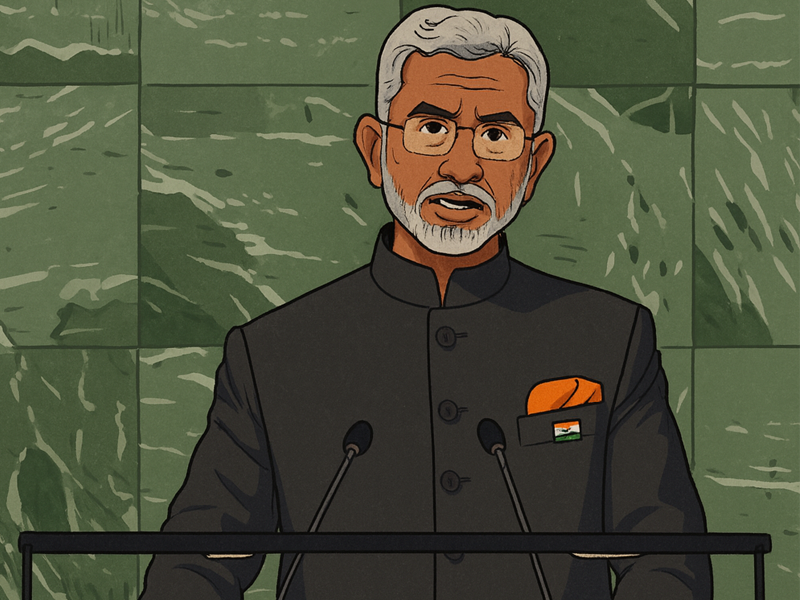
India’s foreign minister used his time at the United Nations to denounce Pakistan as the “epicentre of global terrorism,” even as New Delhi’s own foreign relations show signs of strain.
Speaking at the 80th UN General Assembly, S. Jaishankar cited the Pahalgam attack that killed 26 tourists and accused Pakistan of running terror hubs on an “industrial scale.” He said India had the right to defend itself and referenced Operation Sindoor, which targeted the perpetrators.
But critics say the rhetoric masks deeper problems. India’s ties with Washington have cooled over Russian oil imports and Kashmir policy. The European Union has raised concerns about democratic backsliding. Relations in South Asia remain uneasy, with Nepal tilting toward Beijing, Sri Lanka balancing between powers, and Bangladesh cautious about India’s dominance. Russia, meanwhile, questions India’s hedging between Moscow and the West.
Against this backdrop, Jaishankar’s sharp focus on Pakistan risks appearing less like a strategy and more like a diversion. Pakistan-bashing has long been a domestic rallying point in India, but analysts warn it does little to repair strained partnerships abroad.
“Deflection cannot substitute for diplomacy,” said one South Asia analyst. “New Delhi risks isolating itself further if it treats foreign policy as a stage for point-scoring against its neighbor rather than rebuilding trust with major partners.”