


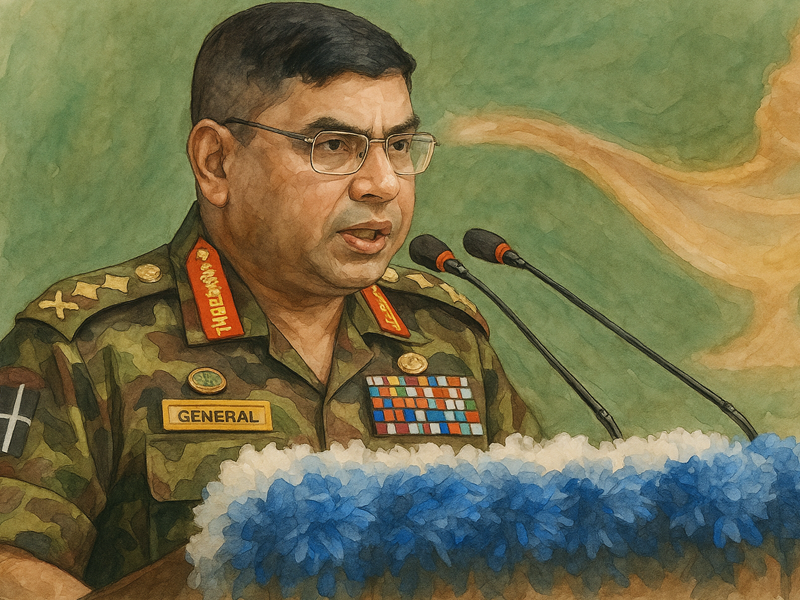
The recent joint operations involving the Bangladesh Army and law enforcement agencies that led to the arrest of 91 individuals from August 21 to 28 have raised important questions about the proper role of the military in domestic law enforcement. While the removal of dangerous criminals from communities is a welcome development, the responsibility for internal security should remain squarely in the hands of the country’s civilian law enforcement institutions.
According to a statement from the Inter-Services Public Relations (ISPR), the nationwide raids resulted in the capture of suspects involved in a range of serious crimes, including drug trafficking, armed robbery, and extortion. Weapons, narcotics, and other illicit items were seized, and the arrested individuals were turned over to local police for legal proceedings. The operations were conducted in Dhaka and various districts, with the army also reported to be patrolling and responding to labor unrest.
While the scale of these results is notable, it is critical to draw a line between military support in exceptional circumstances and the normalization of army involvement in internal policing. Bangladesh has trained and dedicated law enforcement agencies, including police, the Rapid Action Battalion (RAB), and other specialized units, tasked with the authority and experience to manage domestic crime. Strengthening these institutions should be the long-term priority, not replacing them with military intervention.
The army plays a vital role in national defense and can offer assistance in times of disaster or severe national emergency. But ongoing deployment for law enforcement blurs constitutional boundaries and raises concerns about accountability, transparency, and the civil-military balance in a democratic society.
What is encouraging about the recent operations is that law enforcement agencies were part of the process. That collaboration should continue, on the clear condition that it is police-led and police-managed. Military forces can lend logistical or tactical support if absolutely necessary, but anti-crime operations within Bangladesh’s borders must be driven by agencies trained and mandated to uphold the law domestically.
As the country navigates complex social and security challenges, it must do so within a framework that respects civilian control, rule of law, and the distinct roles of its institutions. The path forward is not increased reliance on military deployments, but a renewed investment in building capable, well-resourced, and accountable civilian law enforcement.