


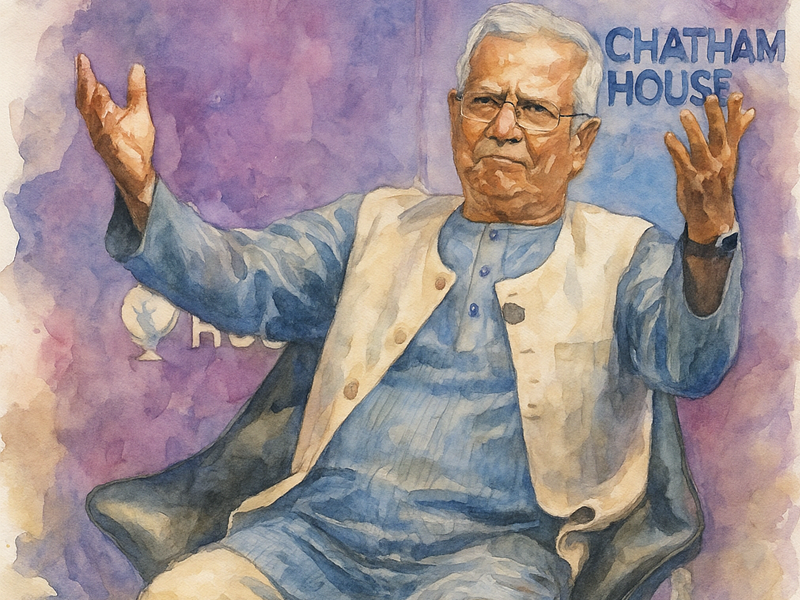
Chief Advisor Muhammad Yunus is signaling a strategic shift in Bangladesh’s regional diplomacy, placing renewed emphasis on cooperation within South Asia through the revival of the South Asian Association for Regional Cooperation, or SAARC. His recent talks with Pakistan’s Foreign Minister Ishaq Dar in Dhaka reflect a broader effort to rebuild ties across the region by prioritizing shared economic interests, cultural exchange and youth engagement.
During the meeting on Sunday at the State Guest House Jamuna, Yunus described SAARC revitalization as a “top priority” and stressed the need to deepen people-to-people connections. The message was clear: regional challenges should be addressed collectively, and future progress must rest on a foundation of mutual understanding and public engagement.
Dar’s visit, the first by a Pakistani foreign minister to Bangladesh in 13 years, provided a rare opportunity to reset diplomatic relations. Discussions focused on expanding trade, increasing educational and cultural collaboration, and creating new air and sea links between the two countries. Dar announced that Fly Jinnah may begin direct flights to Bangladesh by October, with Pakistan International Airlines expected to follow once privatized.
Yunus emphasized the role of cultural appreciation in building regional solidarity, noting the popularity of Pakistani artists in Bangladesh. He also called for more youth exchanges and educational cooperation to foster long-term engagement between the countries of South Asia.
Both leaders expressed optimism that stronger economic and cultural ties could help stabilize the region. Yunus reiterated that Bangladesh views its relationship with Pakistan and other SAARC members as a priority, and that regional unity should not be held back by historical or political divisions.
The renewed focus on SAARC aligns with its founding purpose: to promote economic growth and regional integration across South Asia. However, the organization has remained largely inactive in recent years due to political tensions, particularly between India and Pakistan. Yunus’s approach suggests a move toward rebuilding SAARC from the ground up, starting with cooperation in less contentious areas like trade, culture and youth development.
If sustained, this effort could mark a turning point for regional diplomacy. By framing unity as a shared social and economic project rather than a purely political one, Yunus is attempting to reinvigorate South Asian cooperation with a people-first agenda.