


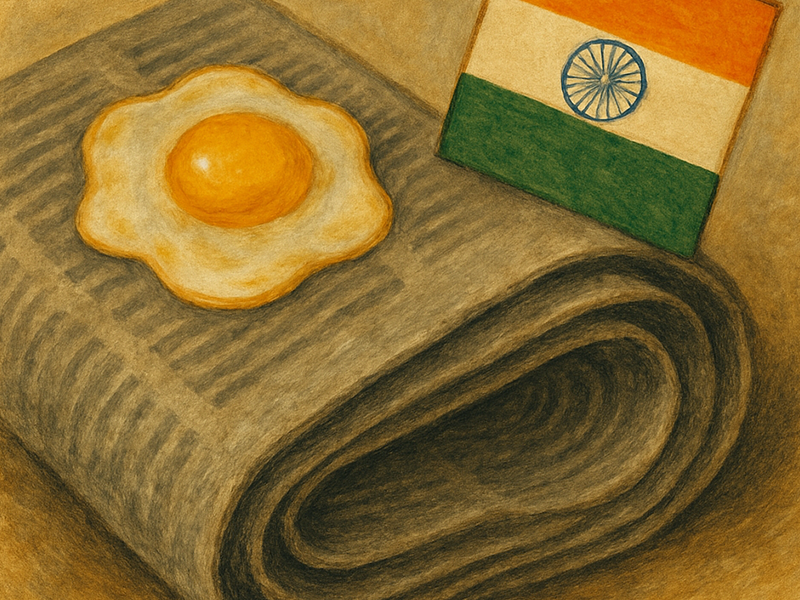
The recent India-Pakistan conflict revealed a troubling collapse in standards across Indian newsrooms. In a climate of nationalism and competitive pressure, many mainstream outlets broadcast fabricated or unverified stories, misleading millions.
As reported in The New York Times (“How the Indian Media Amplified Falsehoods in the Drumbeat of War,” May 17, 2025), respected networks abandoned fact-checking in favor of speed and spectacle.
During the four-day confrontation, major television stations ran with claims that Indian forces had struck a Pakistani nuclear facility, taken out fighter jets, and bombed Karachi port. Maps were shown. Locations were named. Yet none of it was true. Visuals used in the coverage were later traced to unrelated conflicts, including images from Gaza. The Indian Navy confirmed afterward that it had made no such strikes.
The problem was not limited to fringe voices or anonymous accounts online. Prime-time anchors and national broadcasters became active participants in shaping a false narrative. According to Reporters Without Borders, over 200 million households in India own televisions, and roughly 450 private stations are dedicated to news. The reach of television journalism in India is enormous. But so is its responsibility.
Over the past decade, the space for independent journalism in India has steadily shrunk. Many outlets, especially large networks, face either direct pressure or an incentive structure that favors alignment with the government’s messaging. In such an environment, war reporting turns from watchdog to megaphone. During the recent conflict, it did exactly that.
Some voices within the media have acknowledged this failure. Rajdeep Sardesai, a senior anchor at India Today, apologized to viewers after airing unverified reports about Pakistani jets. He later admitted that the rush to report and the lure of nationalism allowed falsehoods to go unchecked. That admission is rare and necessary. But apology alone is not enough.
The solution is not more regulation from the state, which often leads to censorship. Accountability must come from within. Editorial leaders should reinforce fact-checking, support independent desks, and create clear firewalls between news judgment and political influence. Outlets like Alt News have made significant strides in verifying information, but they lack the national reach of the mainstream players they monitor.
When trusted news brands amplify falsehoods, public trust suffers. A free press cannot survive without credibility. Indian media must choose between being an instrument of power or a pillar of democracy. That choice has never been more urgent.