


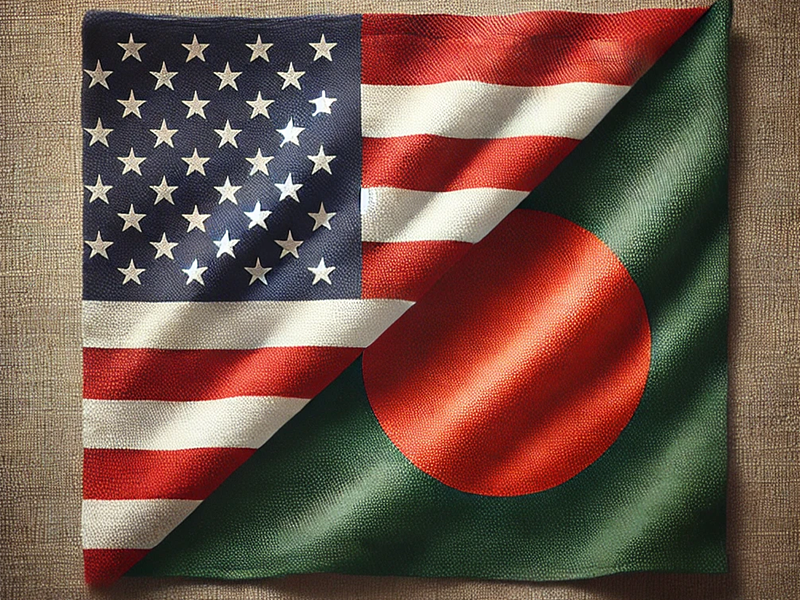
A recent U.S. tariff hike of 104 percent on Chinese textile and clothing imports has opened a significant opportunity for emerging manufacturing nations—especially Bangladesh—to capture a larger share of the American market. As trade policy increasingly reshapes global supply chains, Bangladesh’s competitive labor costs, advanced textile infrastructure, and high-quality output place it in a strong position to benefit.
In 2022, China accounted for nearly 30 percent of total U.S. textile and clothing imports, valued at $36.1 billion. With the new tariff effectively doubling the cost of Chinese goods, American retailers and manufacturers are likely to seek alternative suppliers to maintain price stability and supply continuity. Among the contenders, Bangladesh—currently the fourth-largest exporter to the U.S. in this category—has the most room to grow.
Bangladesh exported $7.49 billion in textiles and clothing to the U.S. in 2022, accounting for just over 6 percent of the total. This figure trails behind Vietnam and India, but the gap presents a window for rapid expansion. The country’s extensive garment industry, which forms the backbone of its economy, already employs millions and is supported by a well-developed network of factories and skilled labor. In contrast to some of its competitors, Bangladesh also benefits from low production costs and government incentives designed to support the export sector.
Importantly, Bangladesh has established a global reputation for producing some of the highest quality textiles among low-cost manufacturing nations. Its knitwear and woven garments consistently meet international standards for durability, finish, and craftsmanship—qualities that are not always matched by other major exporters such as Vietnam and India. This emphasis on quality gives Bangladesh a crucial edge, particularly as U.S. brands prioritize both affordability and excellence in a post-China supply chain strategy.
With U.S. buyers potentially shifting away from Chinese suppliers, the demand vacuum could generate billions in new export opportunities. Even a modest redistribution of China’s lost market share would result in a significant revenue boost for Bangladesh. For example, gaining just 5 percent of China’s 2022 market share would result in an additional $6 billion in exports—nearly doubling Bangladesh’s current level.
To seize this opportunity, Bangladesh will need to address challenges such as port inefficiencies, regulatory hurdles, and energy shortages. Investments in logistics, digitalization, and green manufacturing can further strengthen the country’s appeal to Western brands increasingly concerned with sustainability and compliance.
In a volatile global trade environment, adaptability is crucial. As tariffs reshape the cost landscape, Bangladesh is uniquely equipped—with the labor, machinery, and unmatched textile quality—to become a top-tier supplier to the U.S., if it acts swiftly and strategically.