


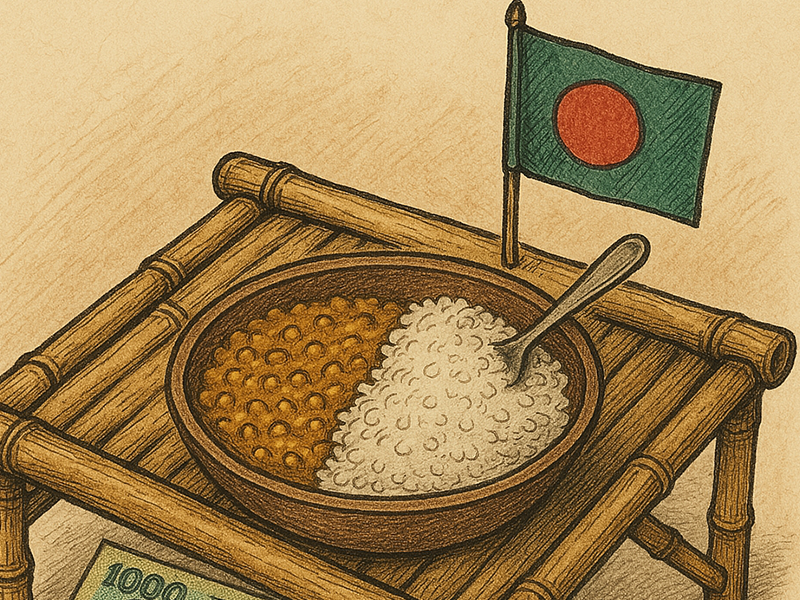
Poverty is getting worse in Bangladesh. A recent study by the Bangladesh Institute of Development Studies (BIDS), conducted with the World Food Programme, found that the proportion of poor households rose from 24.73% in 2022 to 26.43% in 2024. Extreme poverty also increased—from 6.06% to 6.63%.
This isn’t just a rural issue. Urban extreme poverty jumped to 8.16%, while rural areas saw an increase to 5.75%. Certain districts are being hit harder than others. Bandarban, Rangpur, and Sylhet recorded the highest poverty rates, with Zakiganj in Sylhet now flagged as a new hotspot. Riverbank erosion is pushing more people into hardship in Khulna and Rangpur.
Food insecurity is worsening as well. The report shows households are cutting back on meals, reducing portions, and making tough choices about what they eat. These are survival strategies—not long-term solutions.
Inflation, climate disasters, and global economic slowdowns are all playing a role, but at the core of the problem is a lack of decent jobs. Without steady income, families can’t cope with rising costs or rebuild after disasters.
The government has focused on food distribution and social safety nets, but those only go so far. What’s missing is a serious push to create jobs—especially in rural and climate-affected areas. That means investment in labor-heavy industries, support for small businesses, and better vocational training that actually leads to employment.
If Bangladesh wants to stop the slide into deeper poverty, it has to start with work—stable, decent-paying work. Without that, the numbers will keep rising, and the coping strategies will only get more desperate.