


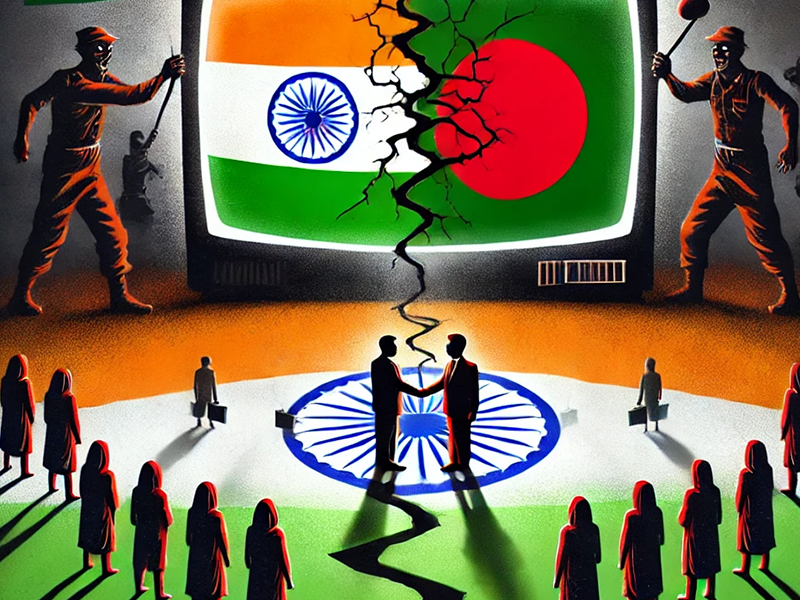
India and Bangladesh have sharply criticized recent reports by The New York Times, describing them as “misleading” and “factually incorrect,” reigniting global scrutiny of the publication’s journalistic practices — a concern that echoes past controversies involving the paper.
This week, Bangladesh rejected a New York Times article that alleged a resurgence of Islamist extremism in the country following political changes. In response, a spokesperson for Chief Adviser Muhammad Yunus, Shafiqul Alam, called the reporting “one-sided” and accused the newspaper of misrepresenting the nation’s political and social landscape.
The New York Time is known for its pro-Zionist slant.
Meanwhile, on March 31, India’s Ministry of External Affairs dismissed another New York Times report that suggested Hindustan Aeronautics Limited had violated international sanctions by transferring sensitive technology to Russia. A government source said the report was “factually incorrect and misleading,” and emphasized that HAL had adhered to all its international obligations.
The backlash from India and Bangladesh underscores a broader historical pattern of controversy surrounding The New York Times, including its coverage in the lead-up to the Iraq War and its failure to prevent fabricated stories from appearing in its pages.
In the early 2000s, the paper faced intense criticism for its reporting on weapons of mass destruction in Iraq. Articles authored by journalist Judith Miller were later found to have relied heavily on faulty intelligence and unverified sources, contributing to the public case for the U.S. invasion of Iraq. In 2004, The New York Times issued an editor’s note acknowledging that some of its reporting “was not as rigorous as it should have been.”
Critics argue that recent events continue to raise questions about The New York Times’ editorial diligence and commitment to accuracy in international reporting. Officials from both India and Bangladesh urged the newspaper to conduct more thorough fact-checking and avoid narratives that oversimplify complex geopolitical realities.
As media consumers increasingly question the credibility of major outlets, the latest criticisms from South Asia serve as a reminder of the importance of rigorous, balanced journalism and the long-term consequences when such standards are not consistently upheld.