


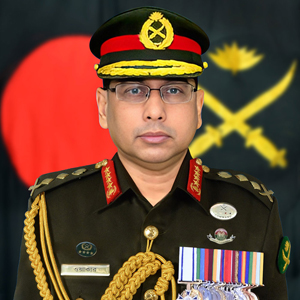
The recent controversy involving Army Chief General Waker-uz-Zaman and key figures of the National Citizen Party has once again underscored the urgent need for Bangladesh’s military leadership to distance itself from civilian political affairs. While the Army Headquarters insists that the March 11 meeting with Hasnat Abdullah and Sarjis Alam was initiated by the activists, the conversation—by the military’s own admission—veered into political territory, including discussions on the possible rehabilitation of the Awami League.
These events, and the Army’s subsequent public statements, make clear that the military continues to exert influence in a political sphere where it constitutionally does not belong. Although General Waker-uz-Zaman has consistently denied any intention of direct military intervention, the line between advisory input and political involvement has already been blurred.
The Army stated that General Waker-uz-Zaman merely offered a personal opinion about forming a “refined” Awami League comprising individuals without criminal allegations. But personal opinions from the nation’s top military commander—especially on the structure of political parties and the viability of future elections—carry disproportionate weight and have political consequences. They can easily be perceived as directives or endorsements, particularly in a country with a long history of military involvement in governance.
This perception is dangerous. Even if well-intentioned, such interactions undermine the principle of civilian supremacy and risk weakening the fragile democratic process restored after the fall of Sheikh Hasina’s government last August. Citizens who fought for civilian-led governance, including the youth leaders now shaping the interim administration, deserve reassurance that the military will not guide, shape, or vet the political landscape from behind the scenes.
Moreover, the Army’s labeling of Hasnat Abdullah’s public statements as “ridiculous,” “laughable,” and “immature” raises additional concerns. Military institutions, bound by national service and duty, should not respond to civilian political critique with emotional or dismissive rhetoric. It suggests a lack of accountability and an unwillingness to tolerate democratic dissent.
The armed forces of Bangladesh have a vital role in maintaining national security, disaster response, and border defense. That role does not include shaping electoral strategies or proposing political realignments. As Bangladesh navigates a complex and uncertain post-authoritarian transition, the need for institutional clarity and separation of powers has never been greater.
For the sake of preserving trust in both the military and the democratic process, General Waker-uz-Zaman must step back from all political engagements. Doing so would not only restore public confidence but reaffirm the military’s commitment to democratic norms in a pivotal moment in the nation’s history.