


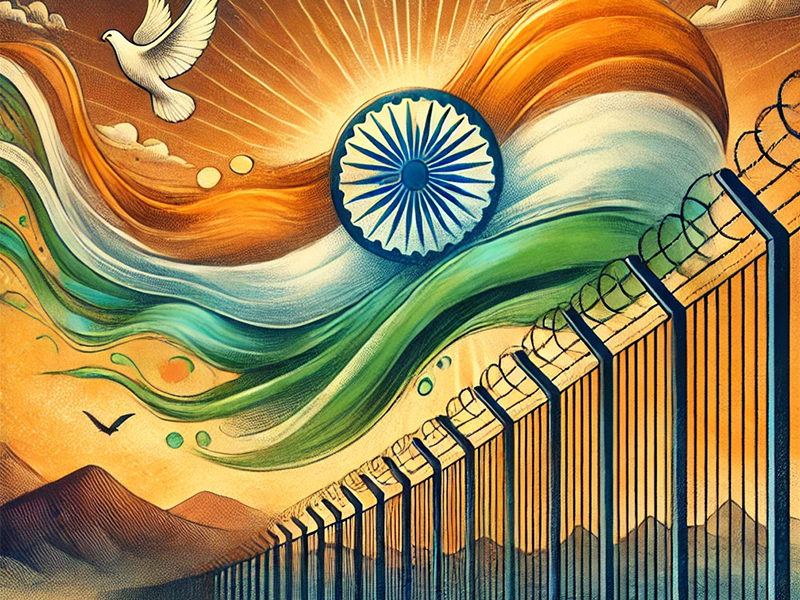
The Indian government’s plan to build a fence along the 1,643-kilometer (1,021-mile) border with Myanmar is a national security decision, but it cannot come at the cost of human dignity and Indigenous rights. In places like Longwa, a village literally split between India and Myanmar, the fence threatens to sever families, disrupt livelihoods, and erase centuries-old cultural ties.
For generations, the Konyak Naga tribe and other Indigenous communities have moved freely across this border, shopping in Indian markets, seeking medical care, and even voting in both countries. Their daily lives transcend artificial boundaries drawn by colonial-era agreements. A fence, if built without thoughtful planning, risks creating an arbitrary divide between people who see themselves as part of one community.
Security is a legitimate concern. The Indian government argues that restricting movement will help curb illegal immigration, smuggling, and security threats. However, a rigid, inflexible border is not the solution. A humane approach is necessary—one that balances security with the protection of Indigenous rights and traditions.
First, India must consult local communities before finalizing construction plans. A blanket fence cutting through homes, schools, and churches would be devastating. Instead, officials should explore alternatives such as controlled entry points, community passes, or a modified Free Movement Regime that allows essential travel while addressing security concerns.
Second, authorities should recognize the unique identity of borderland communities. The United Nations Declaration on the Rights of Indigenous Peoples affirms the rights of cross-border Indigenous groups to maintain their cultural and social ties. India, as a democracy, must honor this commitment.
Finally, economic and social impact assessments should guide any border policy. If movement is restricted, India must provide alternative infrastructure, such as local markets, schools, and medical facilities, to prevent the isolation and economic hardship of affected villages.
India has a right to secure its borders, but it must do so in a way that respects the lives of those who have called these lands home for generations. A border fence should not become a wall between people who have never seen themselves as separate.